






Shantanu Kumar
Founder and Chief Solutions Architect of SearchLift AI, writing on AI search visibility, technical SEO and Search Console.

Founder and Chief Solutions Architect
Shantanu Kumar is the founder of SearchLift AI and its Chief Solutions Architect. SearchLift is built by Dude Lemon LLC, where he leads the architecture of secure AI platforms, enterprise software and cloud infrastructure.
He writes the SearchLift guides on how search engines and AI assistants find, read and cite a website: crawling and indexing, structured data, AI visibility and the Search Console figures that show whether a change worked.
Each guide names its sources, and the product claims in it are checked against the SearchLift platform he builds.
Articles
Written by Shantanu Kumar.
 Search ConsoleNovember 25, 2026
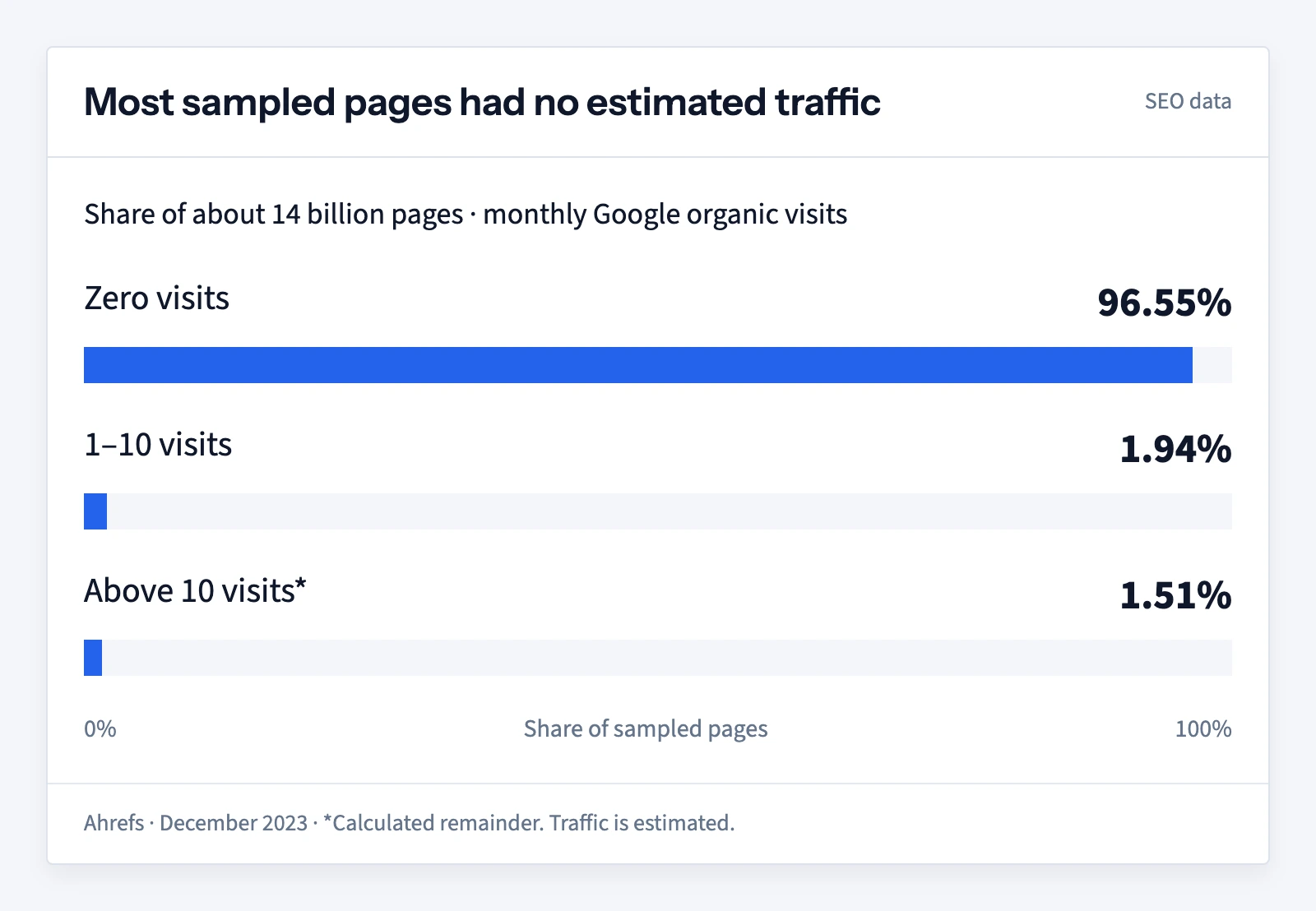
SEO statistics: traffic and ranking benchmarks for small teams
Compare traffic, ranking timelines and page age with charts that keep the study dates and sample sizes visible. Turn the benchmarks into a practical review of your own pages.Read more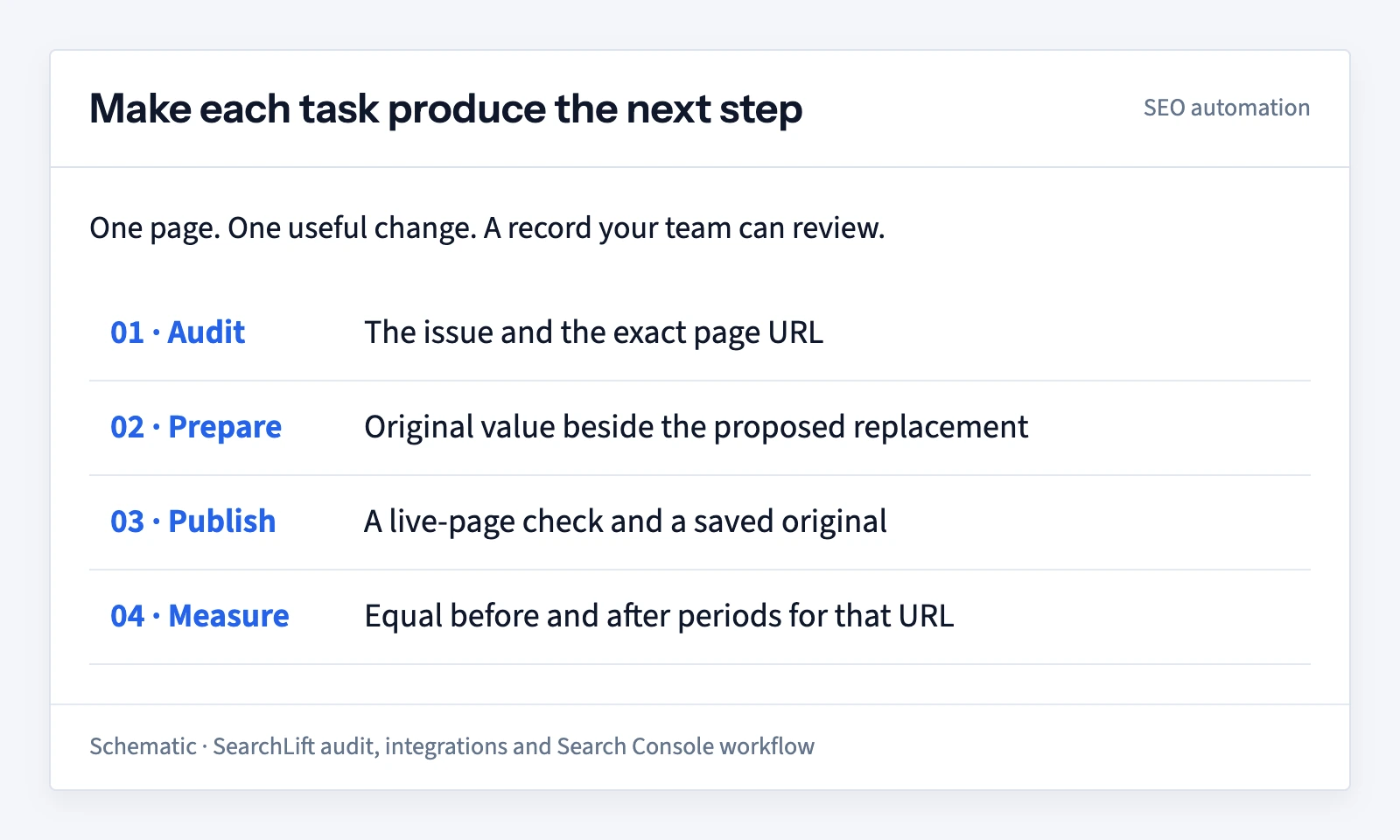 TechnicalNovember 24, 2026
SEO automation: from a page issue to a measured fix
Turn recurring SEO findings into a reviewable page improvement. Choose a task, check what your CMS can publish, keep the original value and measure the page afterward.Read more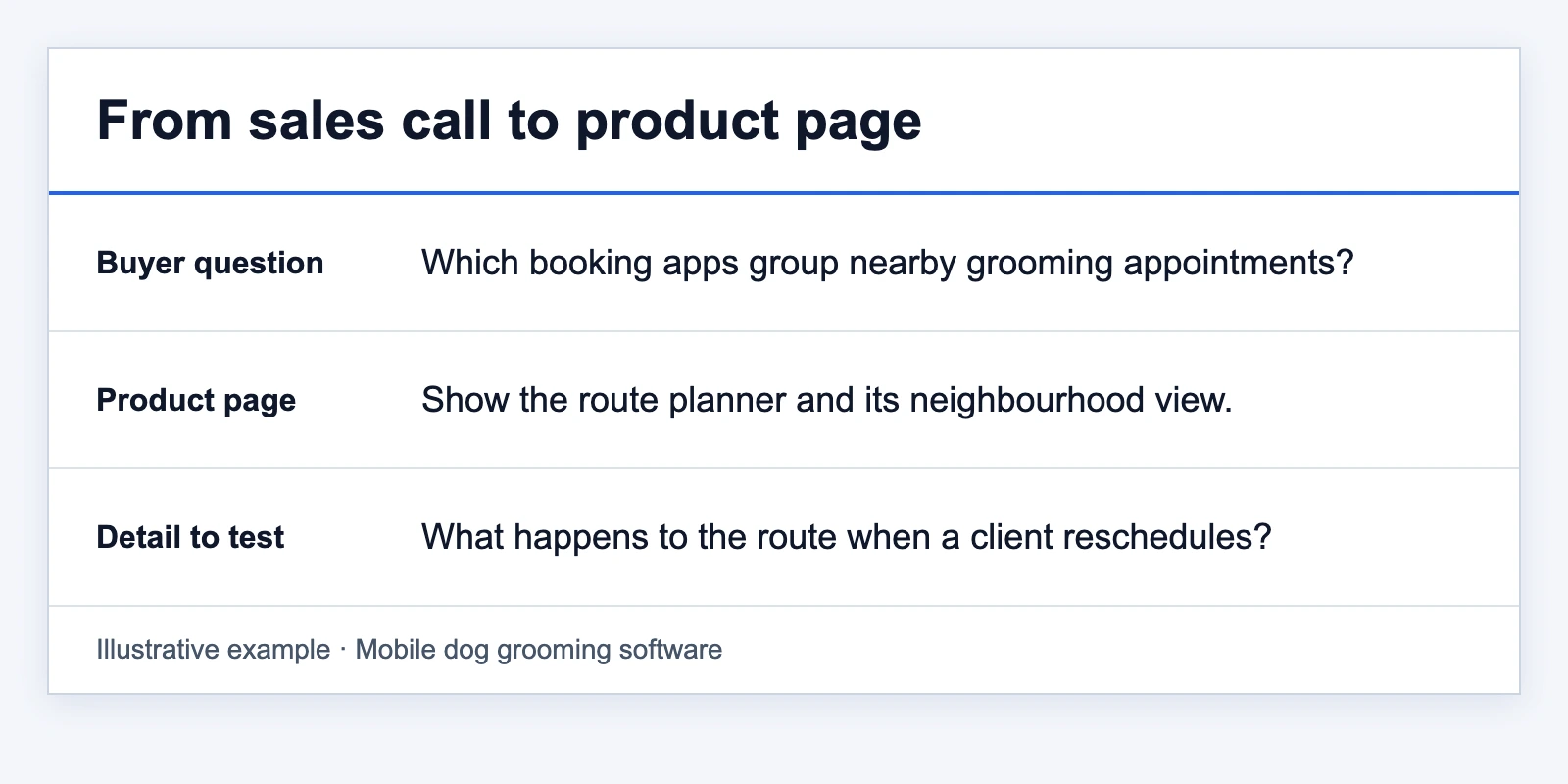 AI visibilityNovember 24, 2026
Best AI Visibility Tools for a Small Business Budget
Compare what a small team gets for its monthly budget and see how a buyer question turns into a useful change on your website.Read more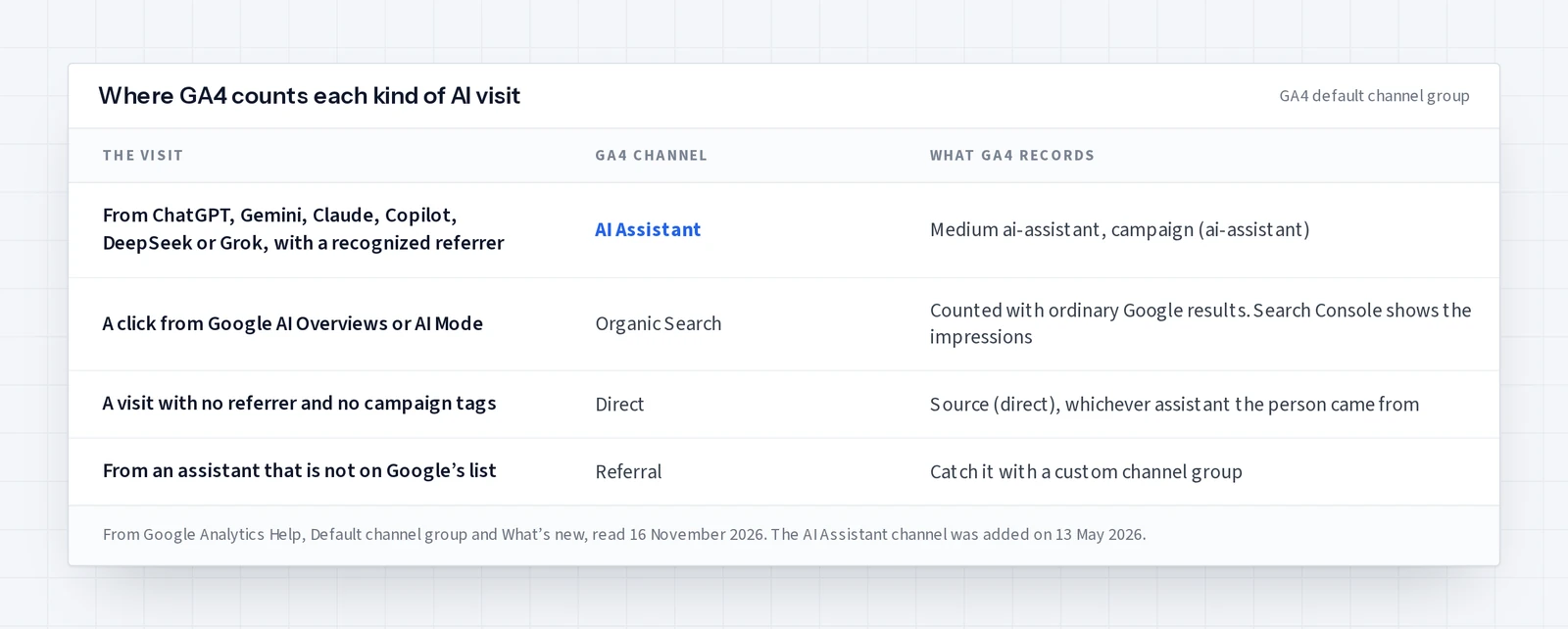 AI visibilityNovember 16, 2026
How to track AI referral traffic and ChatGPT visits in GA4
Google Analytics 4 added an AI Assistant channel on 13 May 2026. Find it in the Traffic acquisition report, see which assistant sent each visit and where it landed, build a custom channel group for older dates, and see which AI visits GA4 counts elsewhere.Read more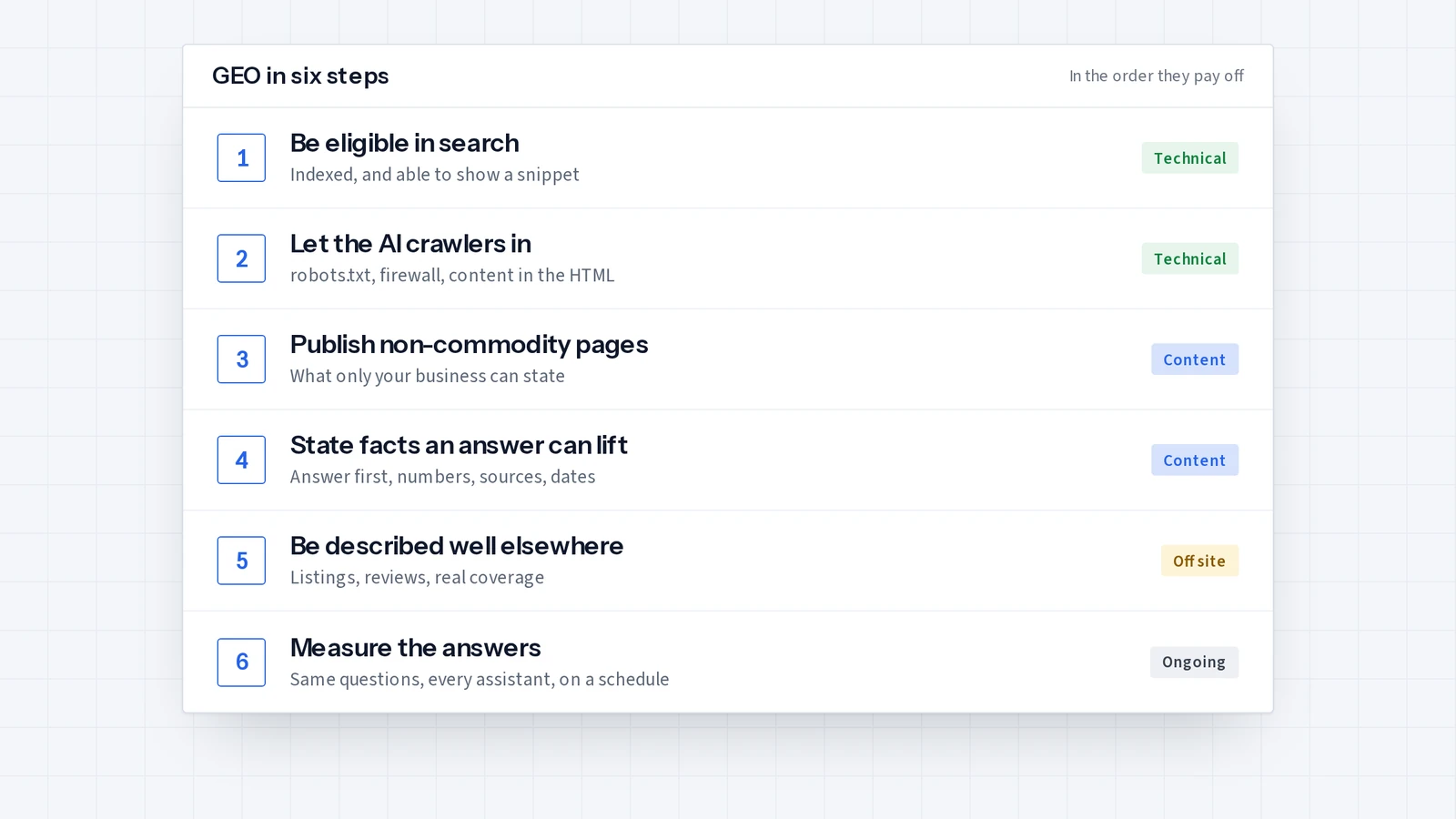 AI visibilityNovember 16, 2026
AI SEO guide: six steps to be named by ChatGPT and AI search
A working AI SEO guide for a business website: the six steps, what AI search actually cites across 10 million citations, what Google says to skip, and how to measure whether ChatGPT, Claude, Perplexity, Gemini and Grok name you.Read more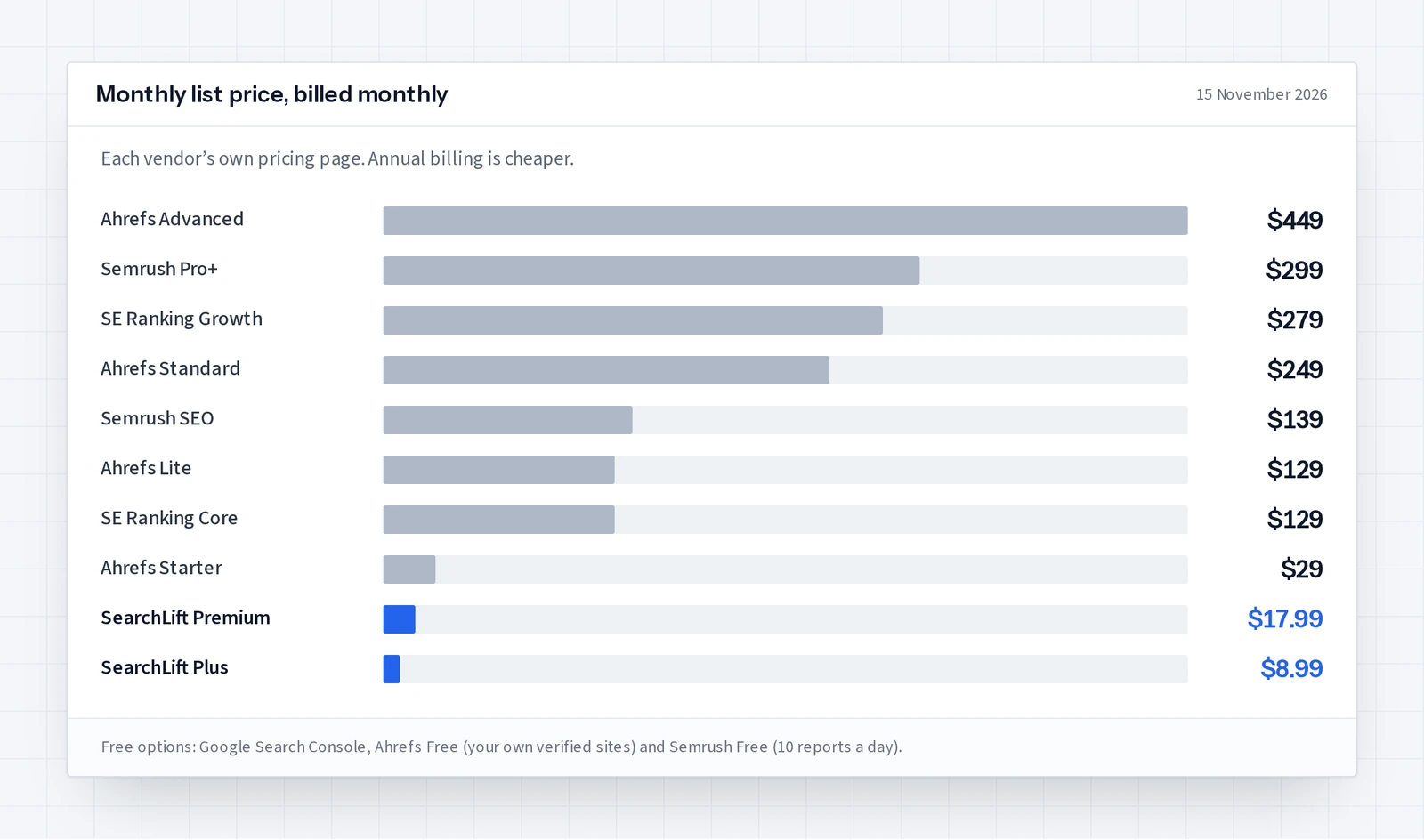 TechnicalNovember 15, 2026
Ahrefs alternatives: pay for the SEO job you actually do
Ahrefs starts at $129 a month for its Lite plan. Compare Semrush, SE Ranking, free tools and SearchLift by the job each one does, with every price read from the vendor’s own page.Read more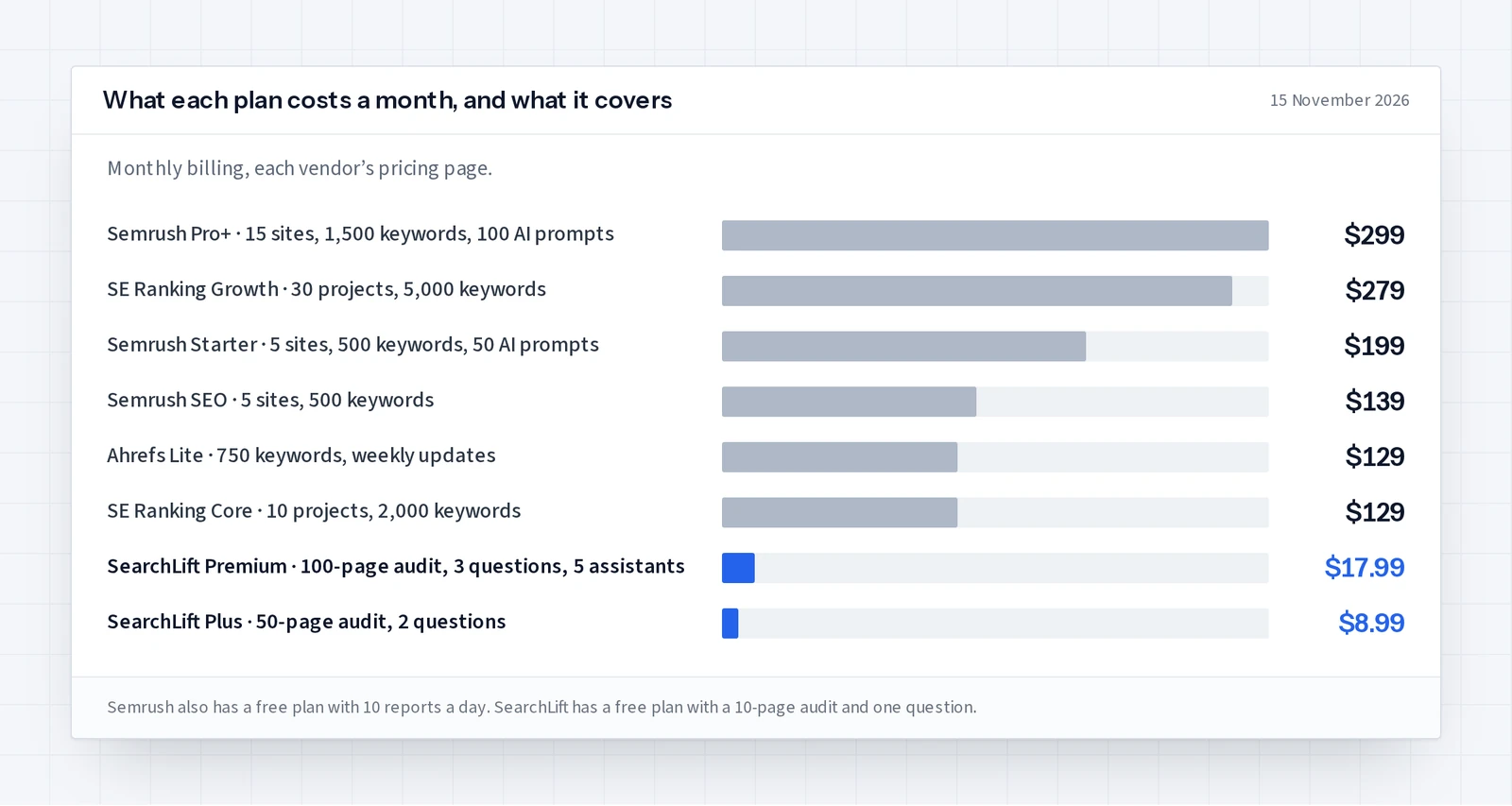 TechnicalNovember 15, 2026
Semrush alternatives: what each one costs and which job it does
Semrush starts at $139 a month for its SEO plan and $199 with AI tracking. Compare Ahrefs, SE Ranking, free tools and SearchLift by price and by the job you need done.Read more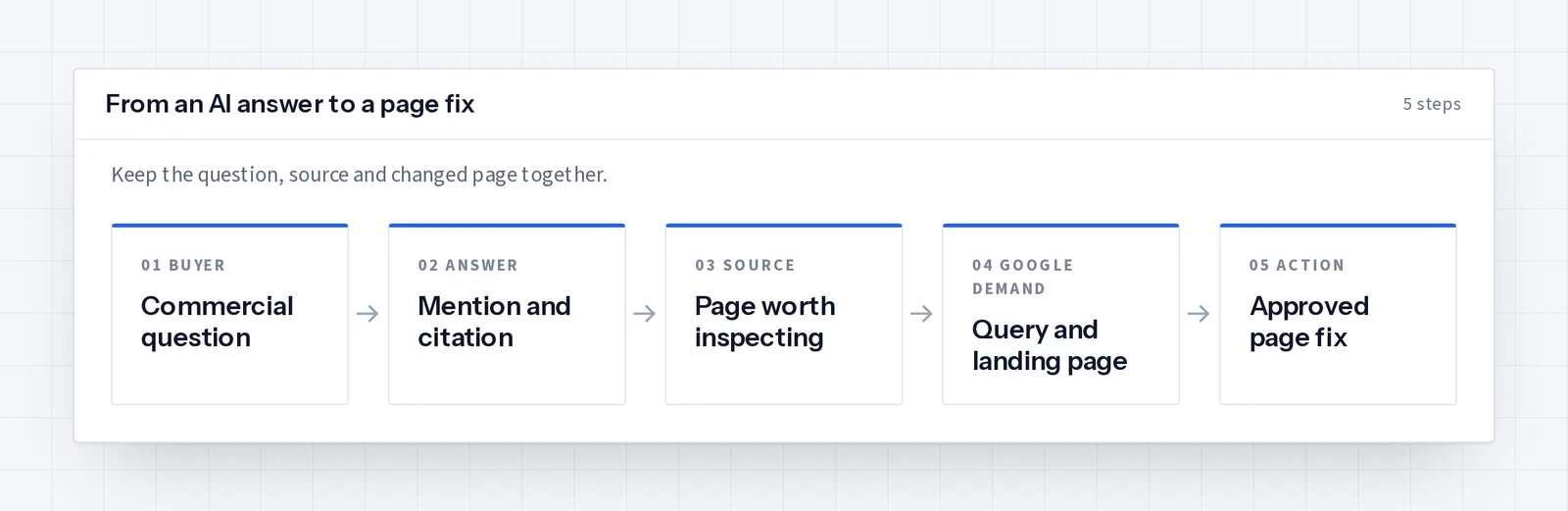 TechnicalNovember 14, 2026
Best Shopify SEO apps: choose one that fixes your product pages
Compare Shopify SEO apps by the jobs a store owner needs done: product metadata, images, search data, AI recommendations and a reviewable path to publish improvements.Read more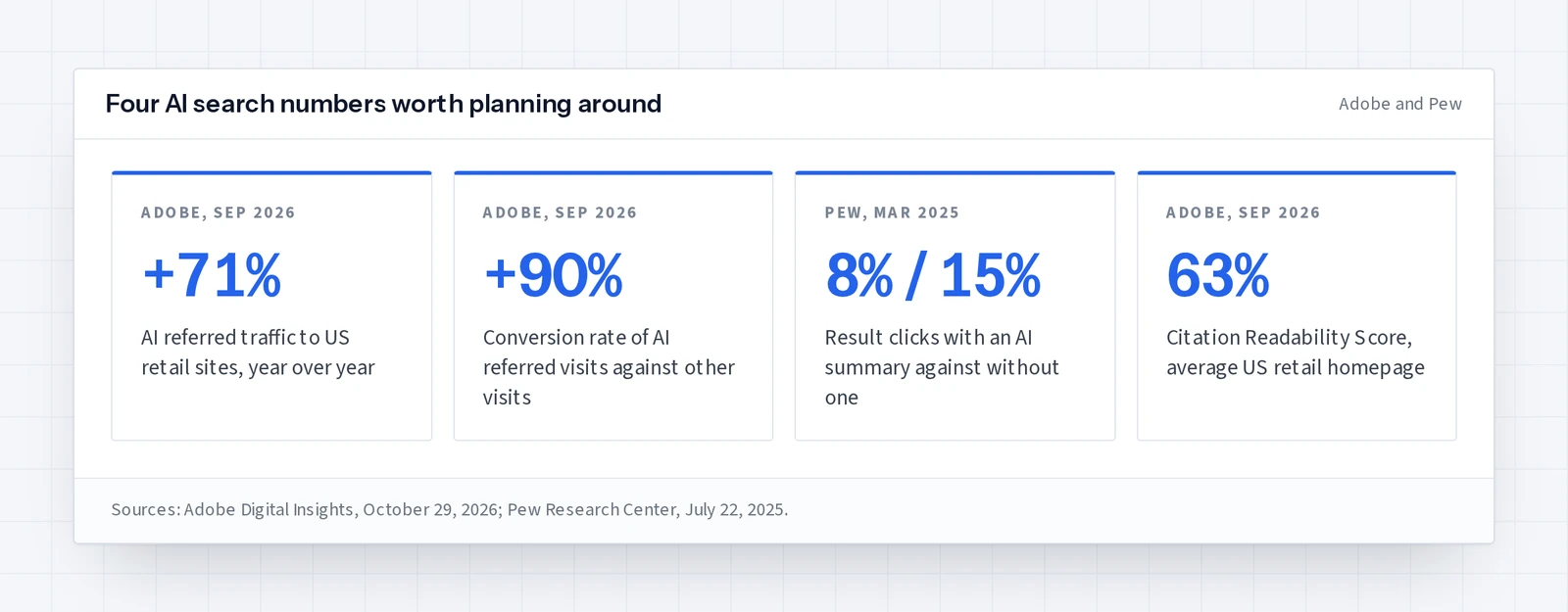 AI visibilityNovember 10, 2026
AI search statistics: what the numbers mean for your business in 2027
AI referrals grew 71% year over year and those visitors convert 90% better, while clicks fall when an AI summary appears. See the measured numbers, what each one does and does not prove, and the pages to improve first.Read more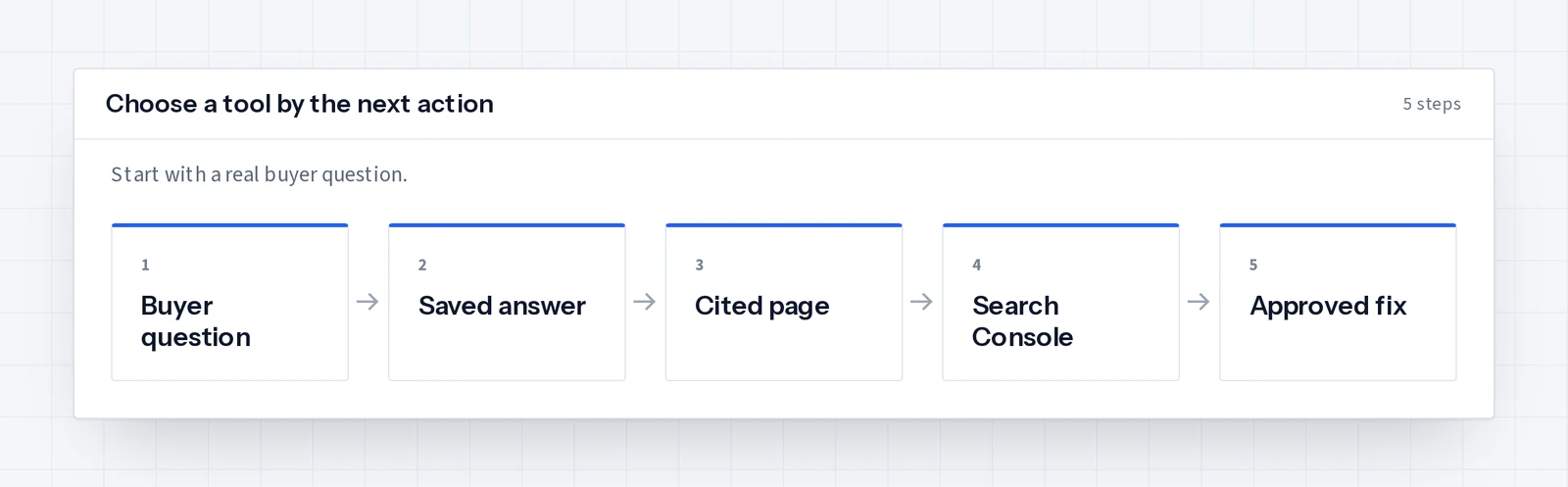 AI visibilityNovember 7, 2026
Best AI visibility monitoring and SEO automation tools
Compare the tools that track AI answers, citations and search visibility. See how SearchLift connects those findings to a page audit, Search Console opportunities and reversible fixes.Read more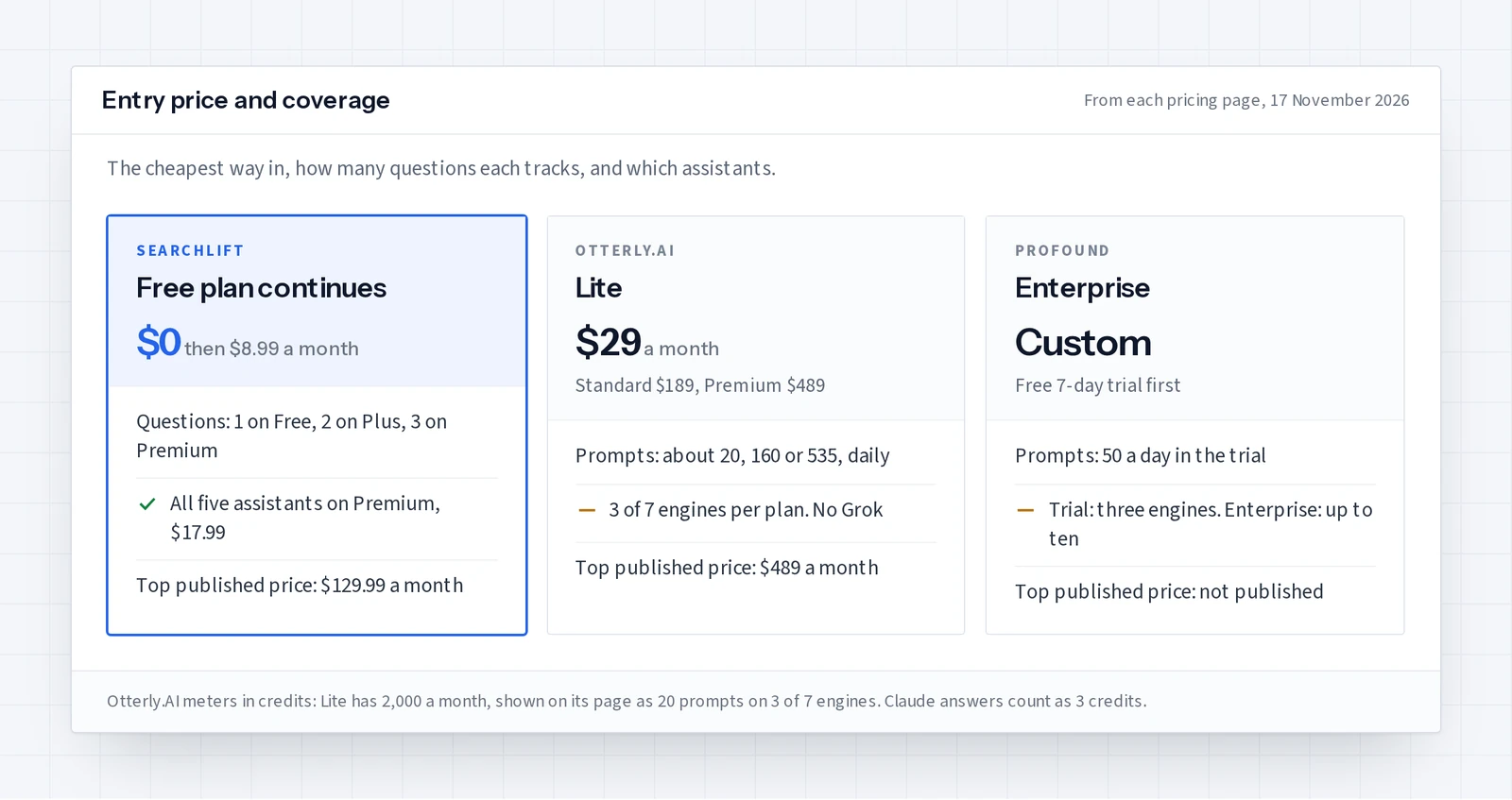 AI visibilityNovember 7, 2026
Otterly.AI vs Profound vs SearchLift: prices, coverage and which one fits
Otterly.AI starts at $29 a month, Profound sells a Custom enterprise contract and SearchLift is free to start. Compare published prices, engines tracked and what each tool does after it shows you the answer.Read more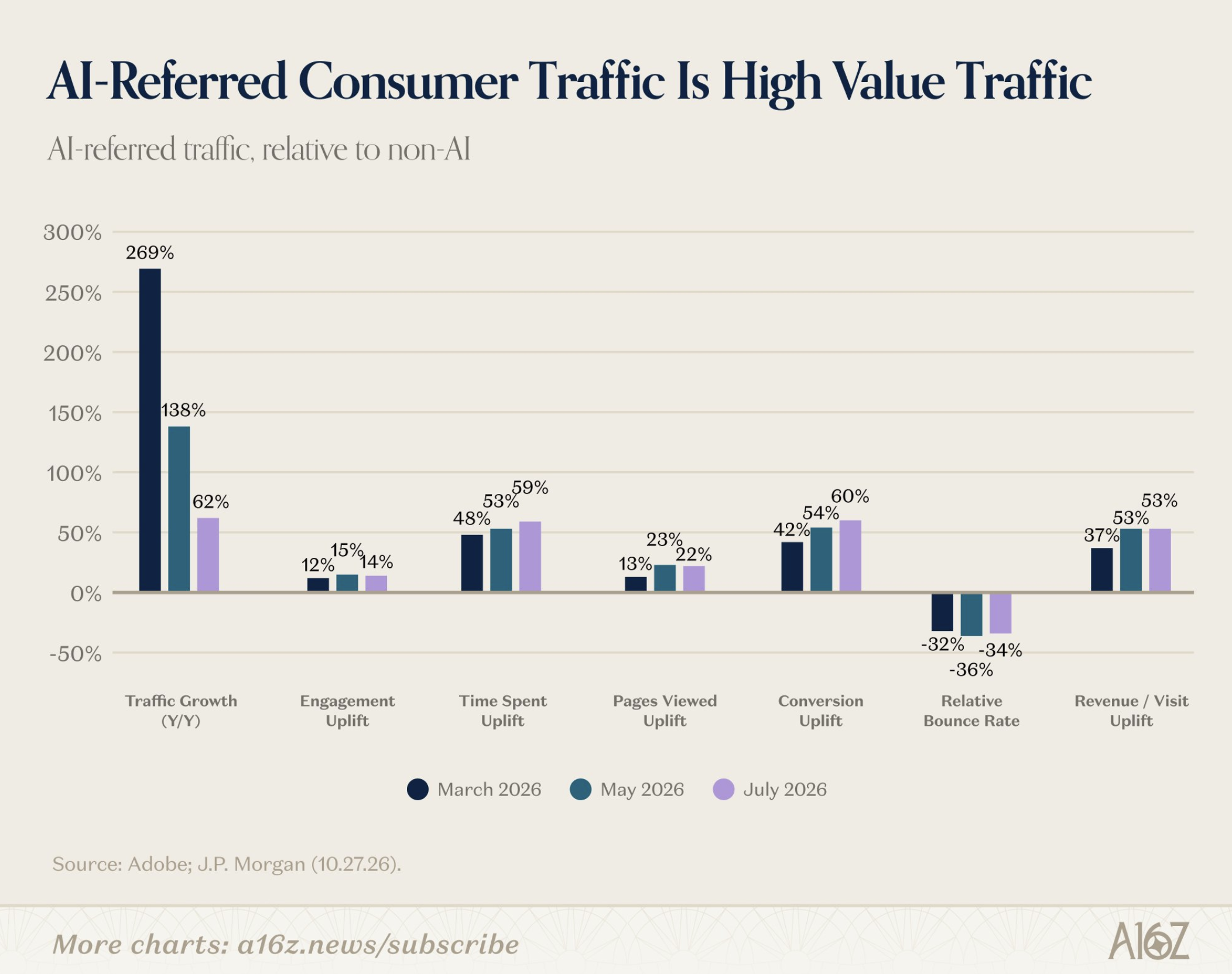 AI visibilityNovember 2, 2026
AI referral traffic: why retail teams should measure it now
The a16z chart shows AI-referred U.S. retail traffic still growing as its observed conversion premium rises. Read the March-to-July data, the newer September result, and a practical test for your own store.Read more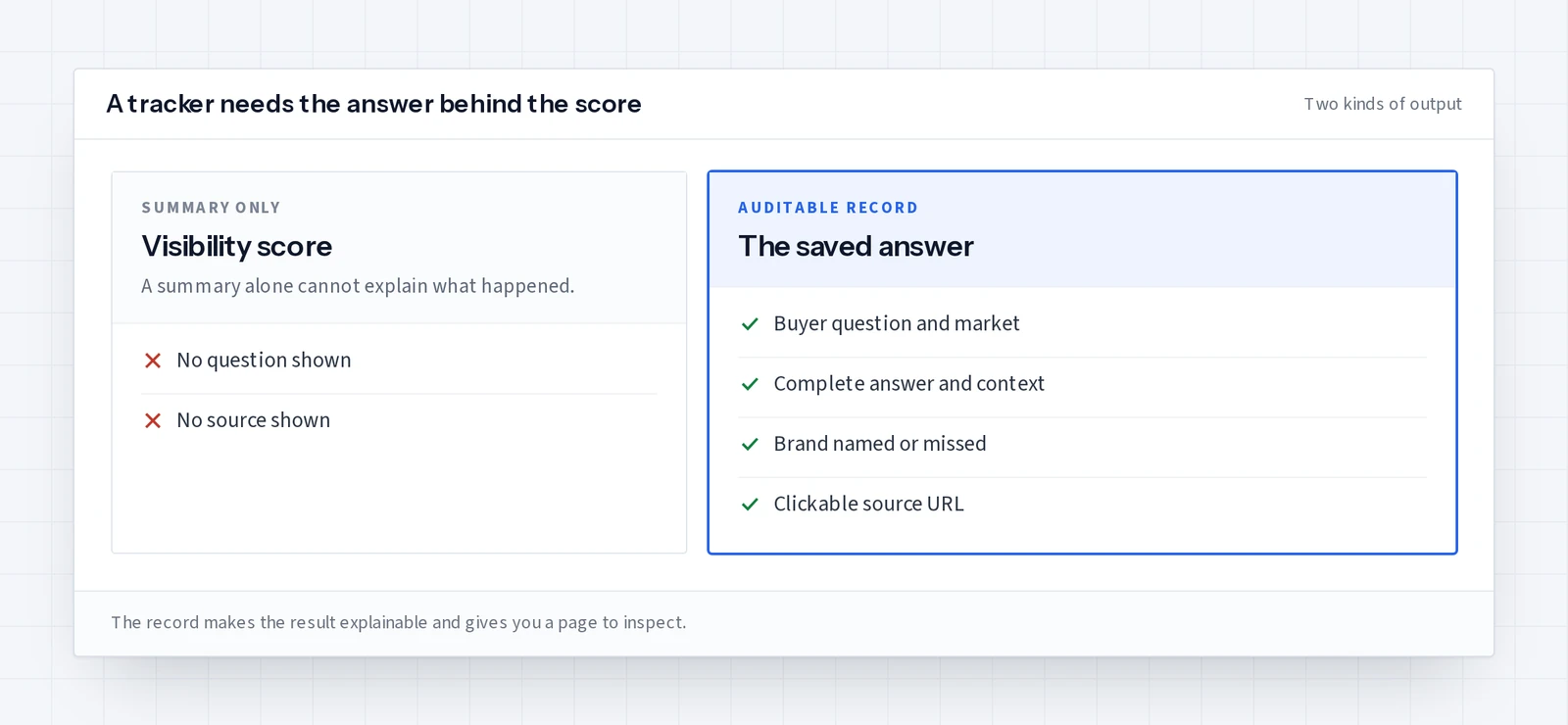 AI visibilityNovember 1, 2026
ChatGPT visibility tracker: what a useful result must show
A ChatGPT visibility tracker should show the answer behind its score. Use a repeatable buyer-question test to separate brand mentions, citations, recommendations and actual visits before choosing a tool.Read more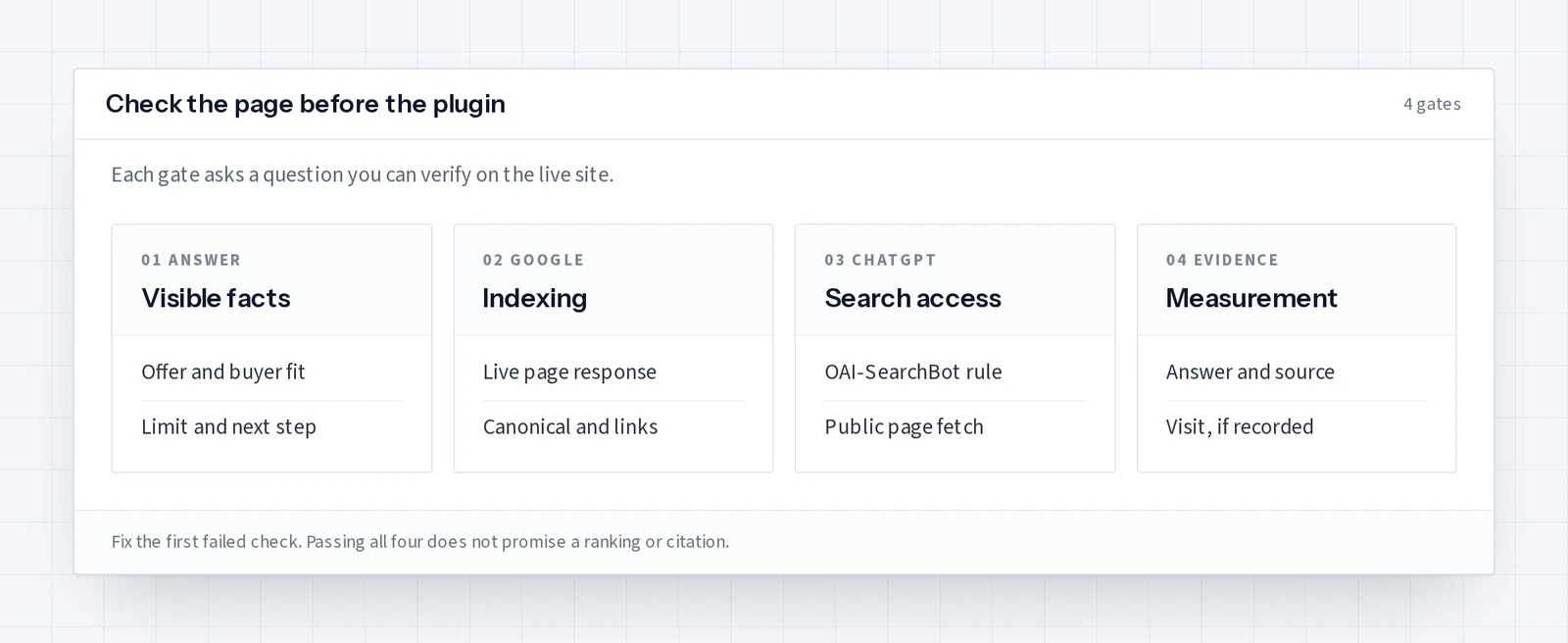 AI visibilityNovember 1, 2026
AI SEO for WordPress: check the page before adding a plugin
AI SEO for WordPress starts with a page that answers a buyer question and can be found by search. Use this practical check for visibility settings, page facts, crawler access and measurement before adding another plugin.Read more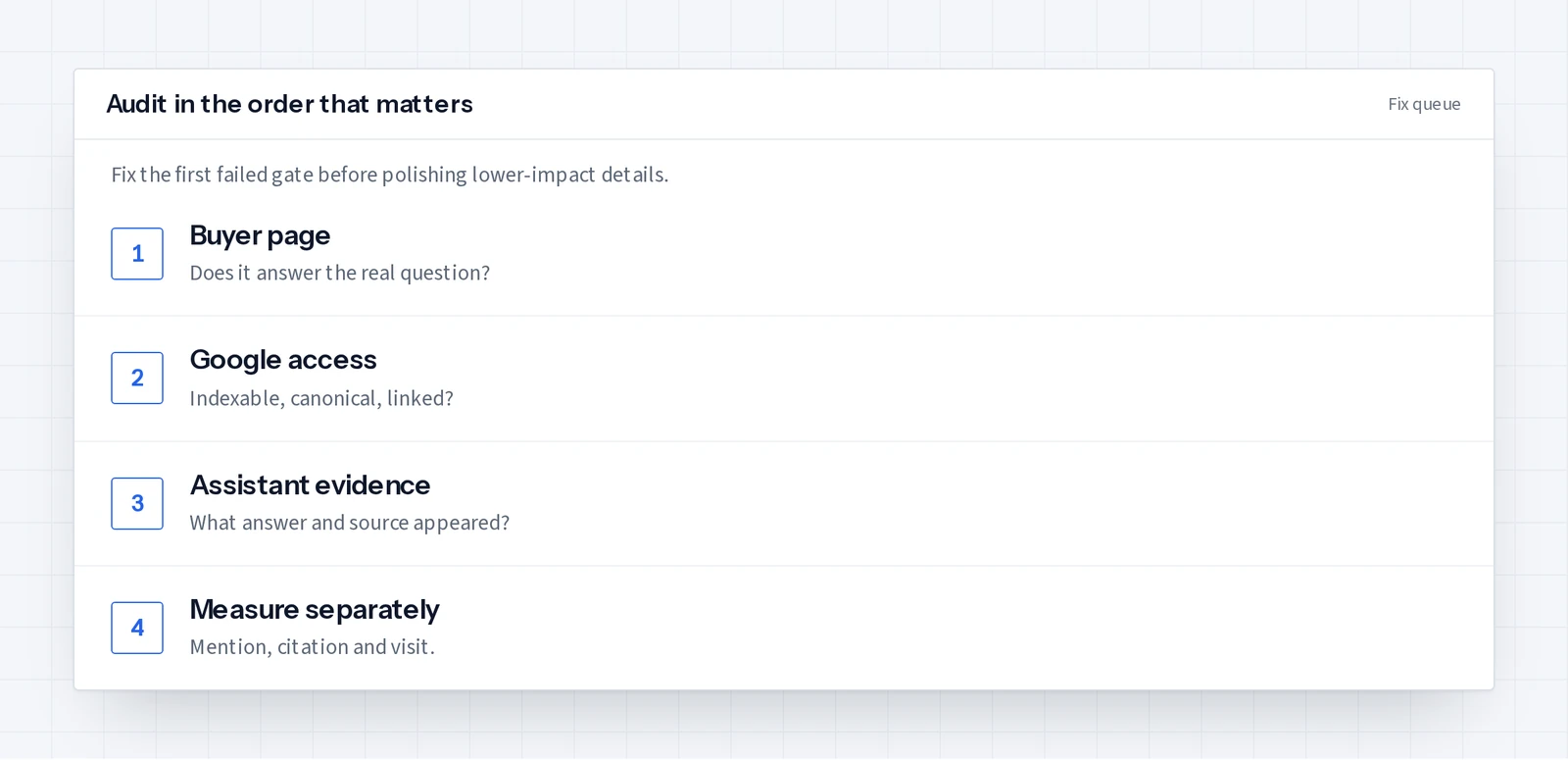 AI SEOOctober 29, 2026
AI SEO audit: find the fix that matters first
An AI SEO audit should tell you which page to fix and why. Use this short workflow to check the buyer answer, Google eligibility, assistant evidence and the visit path before paying for another score.Read more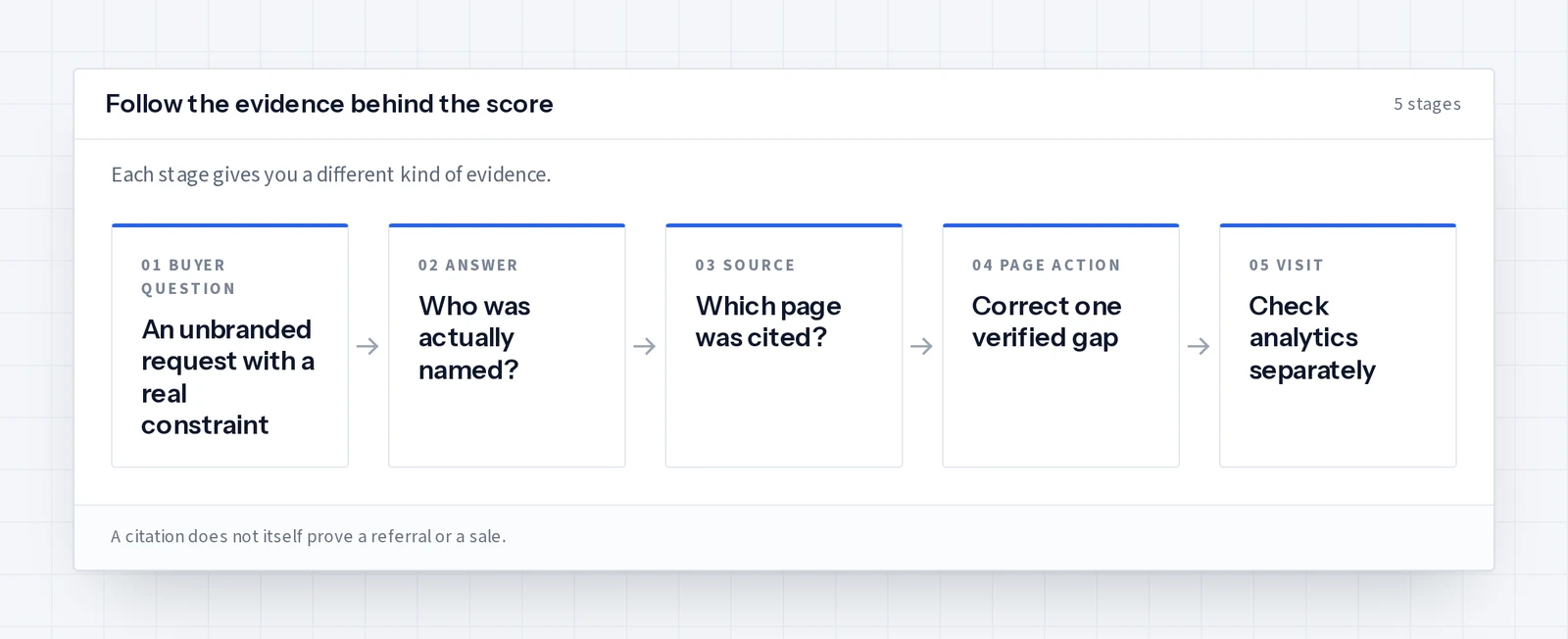 AI visibilityOctober 26, 2026
ChatGPT SEO tool: test one before you pay
A useful tool should show the answer a buyer sees, the sources behind it and a page your team can improve. Run this small trial before comparing prices or trusting a visibility score.Read more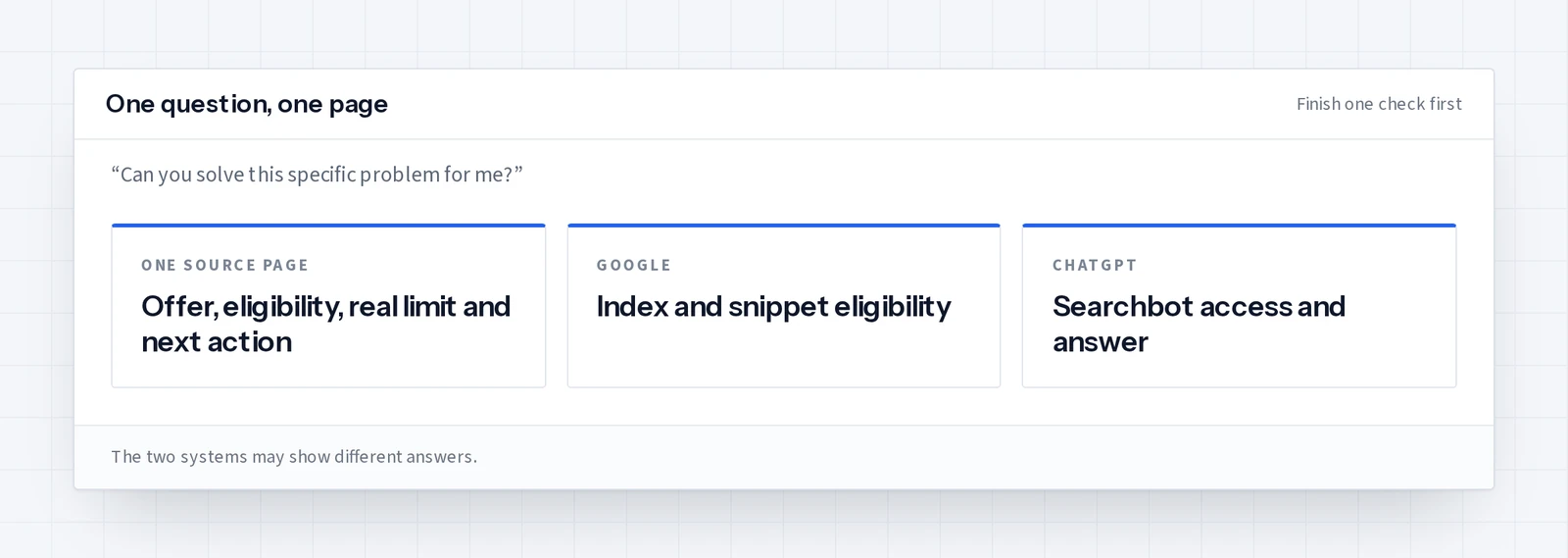 AI visibilityOctober 26, 2026
AI SEO for small business: start with one buyer question
You can check whether a real customer question leads to a useful page and an accurate AI answer without buying a large toolset. This worksheet keeps Google impressions, assistant mentions and visits separate.Read more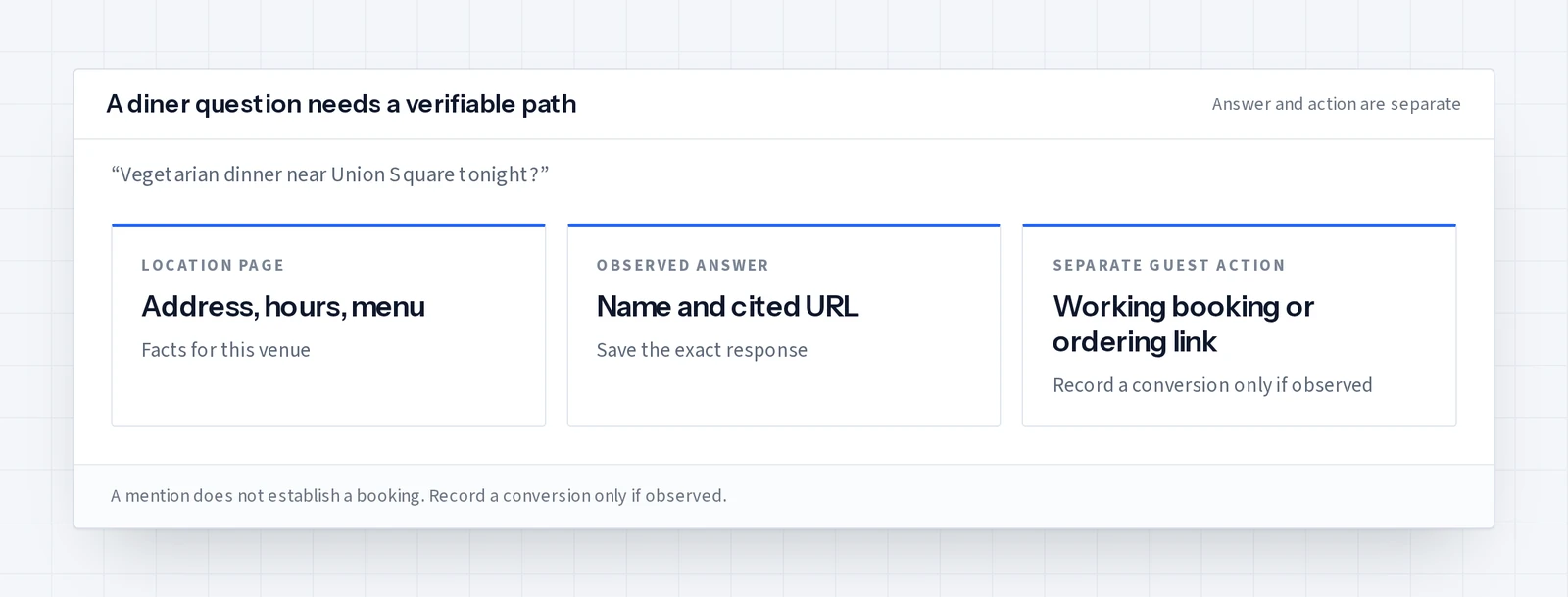 AI visibilityOctober 23, 2026
AI SEO for restaurants: make each location answerable
A restaurant needs one accurate trail from a diner’s question to its location page, menu and booking or ordering link. Use this checklist to find gaps and measure answers without assuming a mention becomes a guest.Read more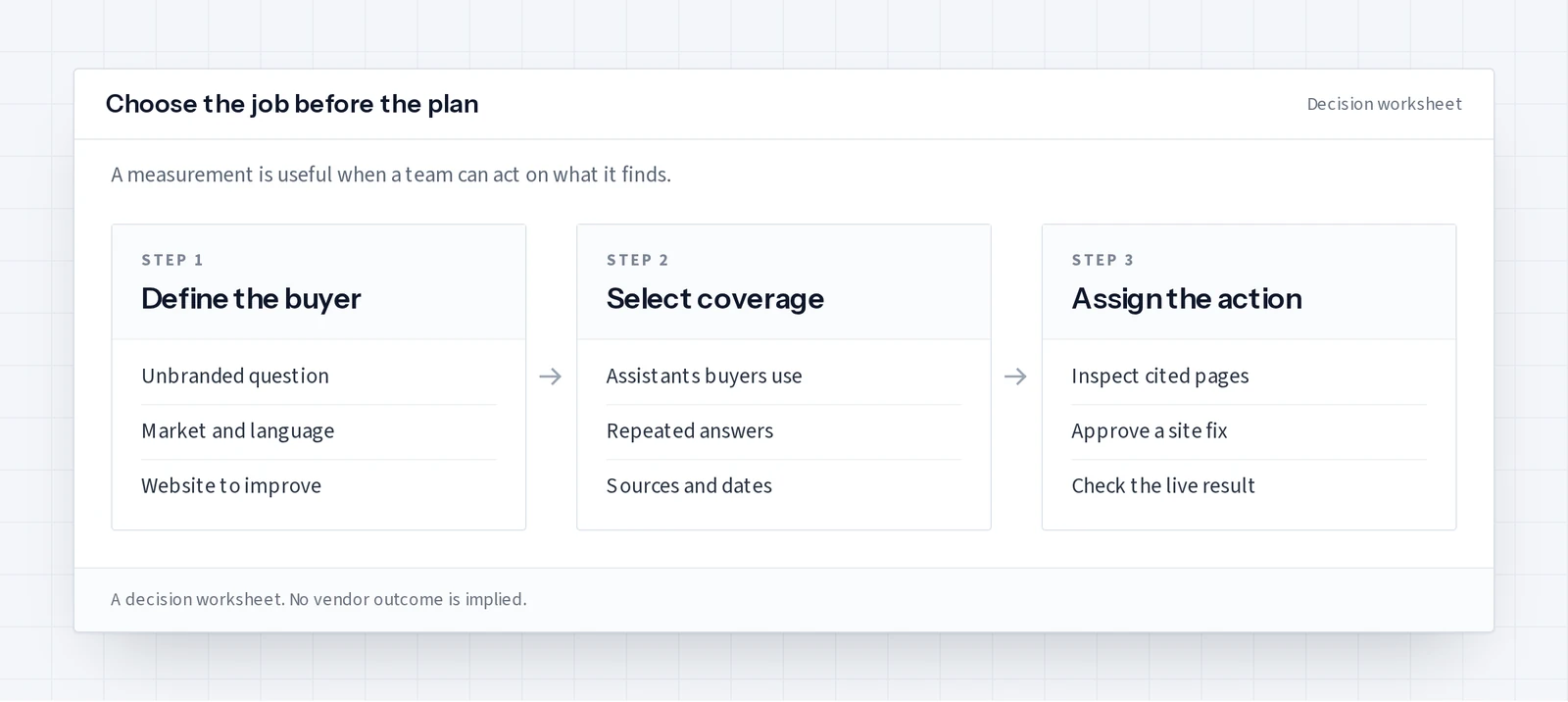 AI visibilityOctober 18, 2026
AthenaHQ alternative: compare the coverage and the work
AthenaHQ and a smaller AI SEO platform meter different things. Use current plan pages to compare assistants, tracked questions, credits and the work required after a missing mention.Read more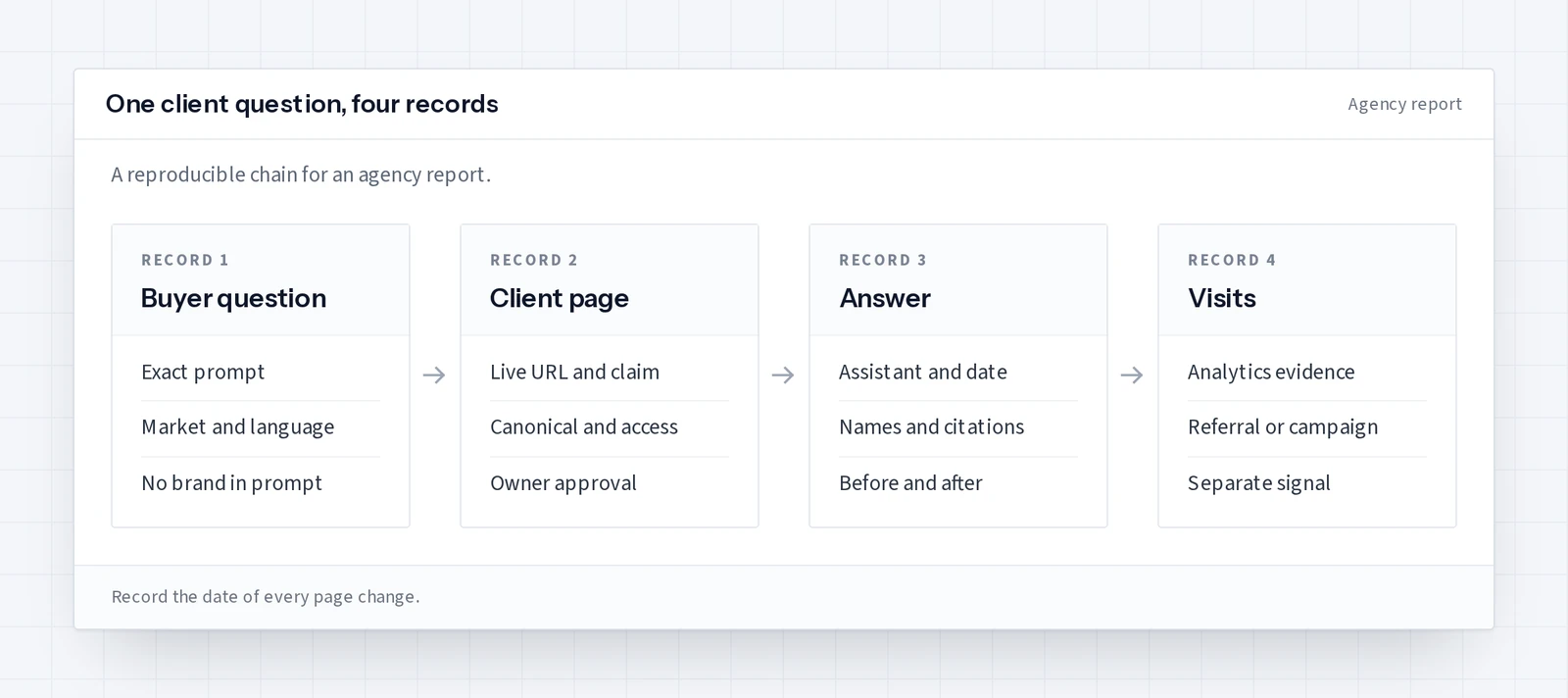 AI SEOOctober 16, 2026
AI SEO for agencies: a client reporting workflow
Give a client an evidence trail from a buyer question to a live page, an assistant answer and a measured visit. This workflow keeps recommendations, citations and traffic separate.Read more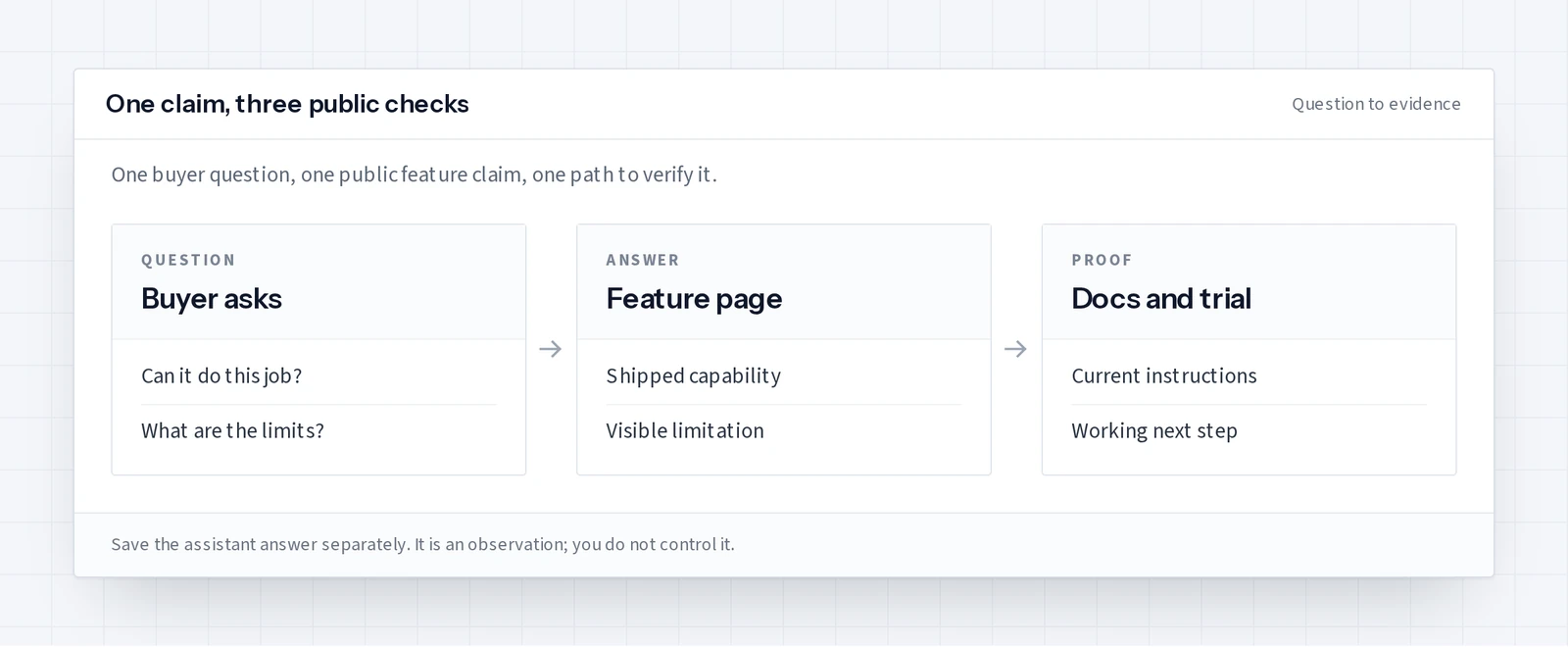 AI SEOOctober 15, 2026
AI SEO for SaaS: make one feature page answerable
Start with a buyer question about one product capability. Reconcile the feature page with public documentation, check crawler access and internal links, then measure what AI assistants actually say.Read more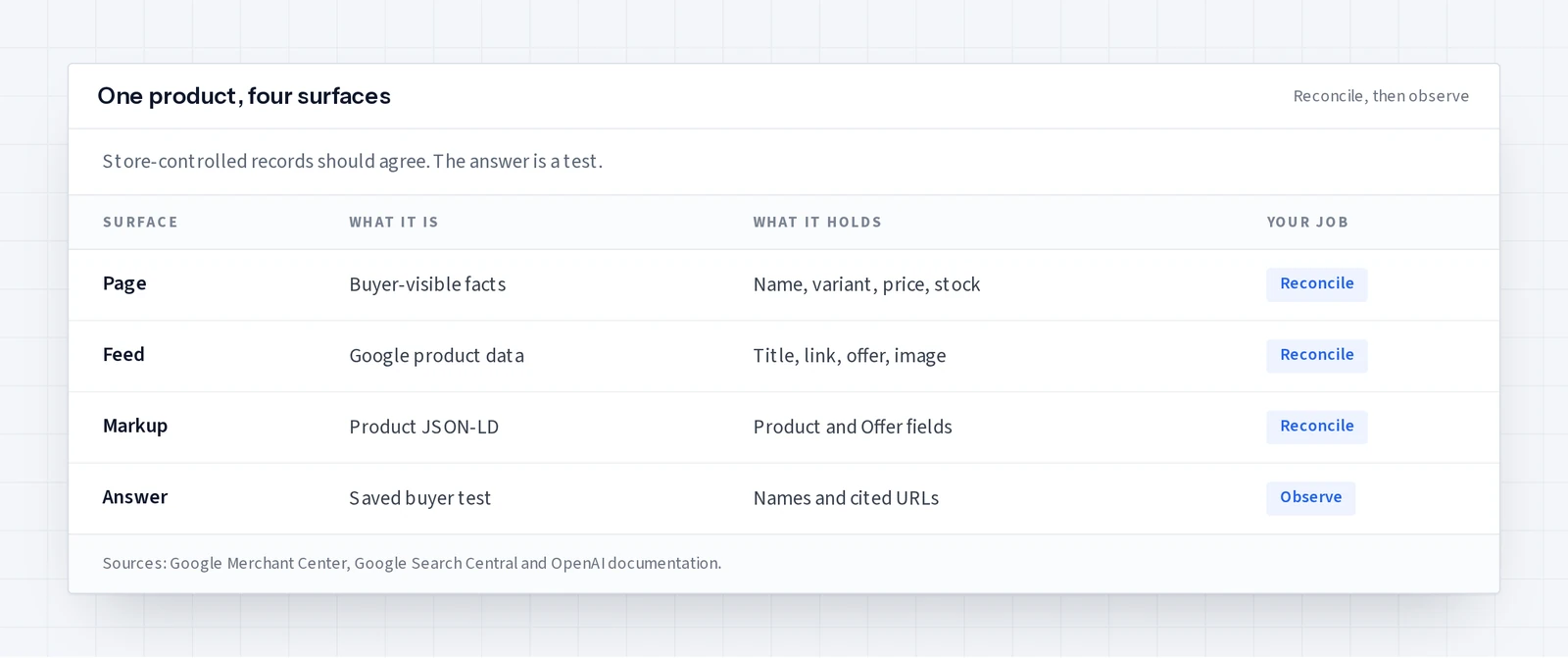 AI SEOOctober 14, 2026
AI SEO for ecommerce: audit one product before writing more
An ecommerce AI SEO audit starts with one product. Compare its landing page, Merchant Center data, structured data and buyer answers before scaling changes across the catalogue.Read more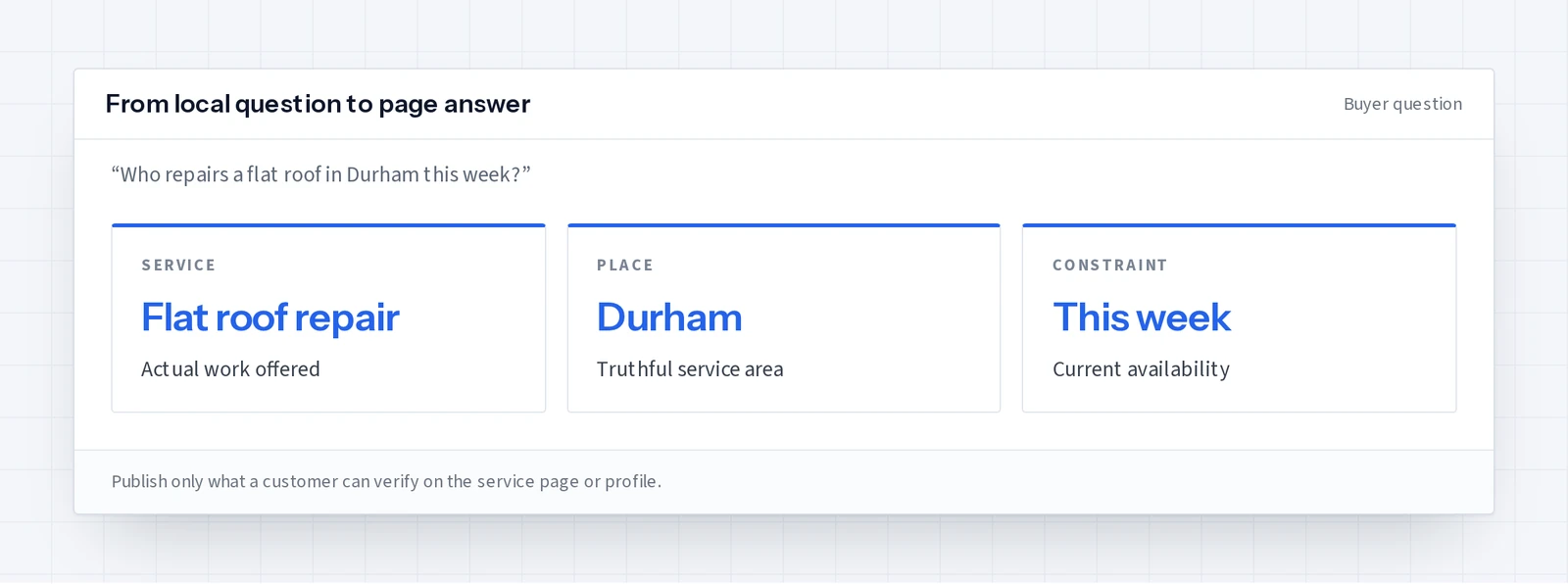 AI visibilityOctober 13, 2026
AI SEO for local service businesses: make one page answerable
A practical way to make a local service page easier for Google and AI assistants to understand. Check the service, area, limits, Business Profile, crawler access and three separate measures of visibility.Read more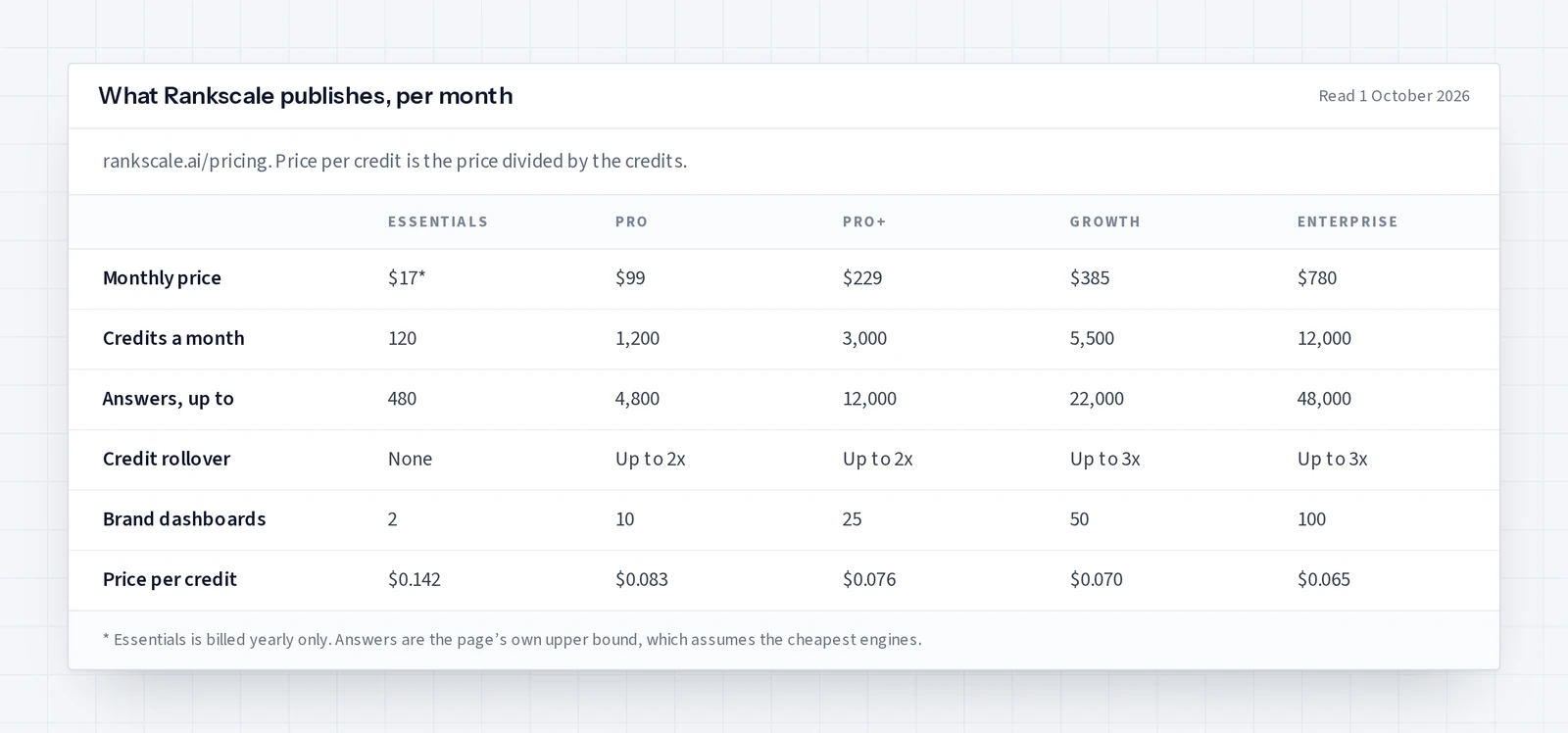 AI visibilityOctober 1, 2026
Rankscale alternatives: what a credit buys, engine by engine
Rankscale prices AI visibility tracking in credits, and its own calculator charges 0.25 credits for a ChatGPT answer and 2 for a Claude one. What each published tier buys, a worked example for ten prompts, and how to compare an alternative fairly.Read more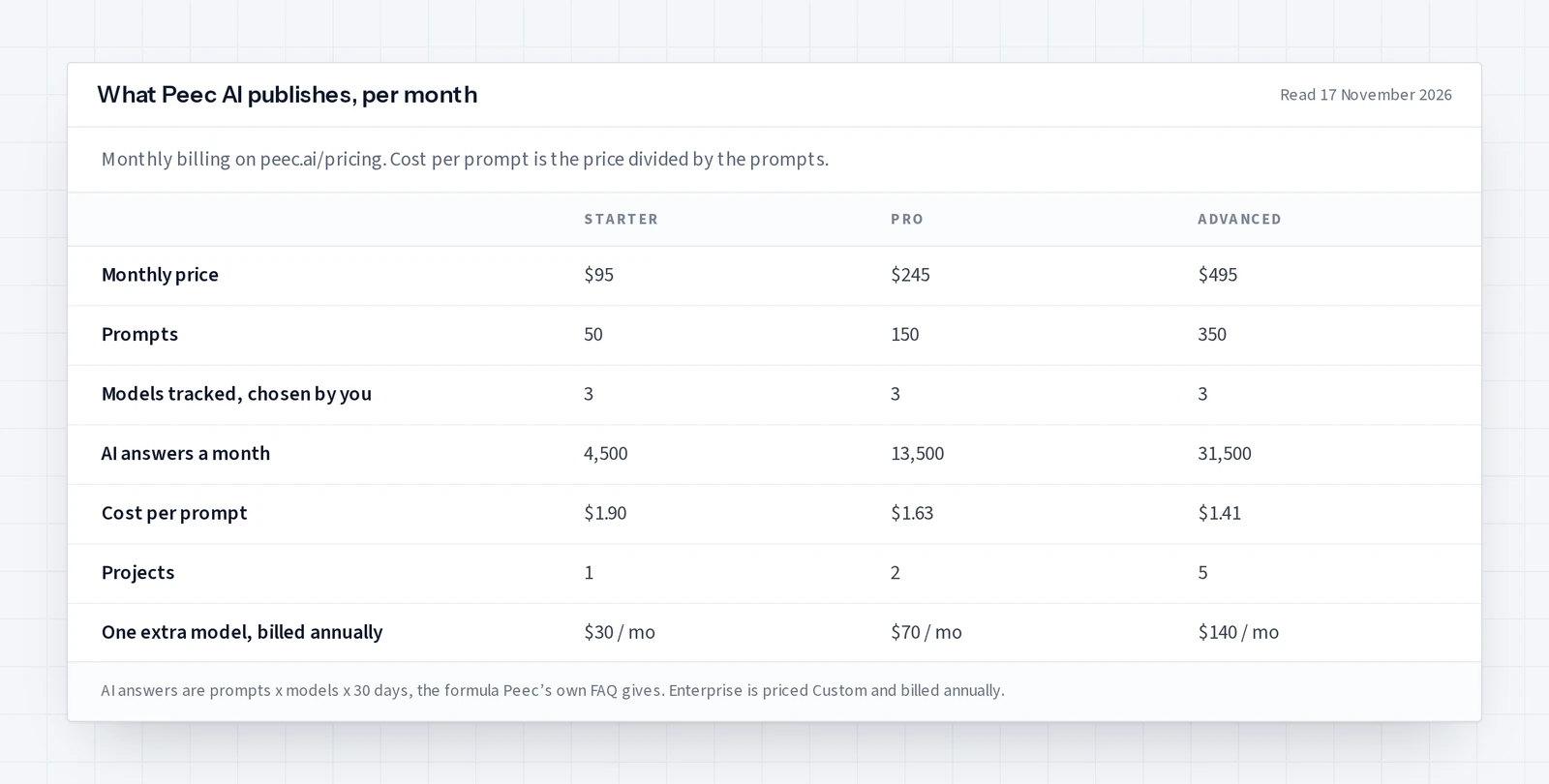 AI visibilitySeptember 30, 2026
Peec AI alternatives: what $95 a month tracks, and what it leaves out
Peec AI publishes three monthly prices from $95 and lets each plan track three AI models. Which assistants those three can be, which two are held back for Enterprise, and how to price an alternative honestly.Read more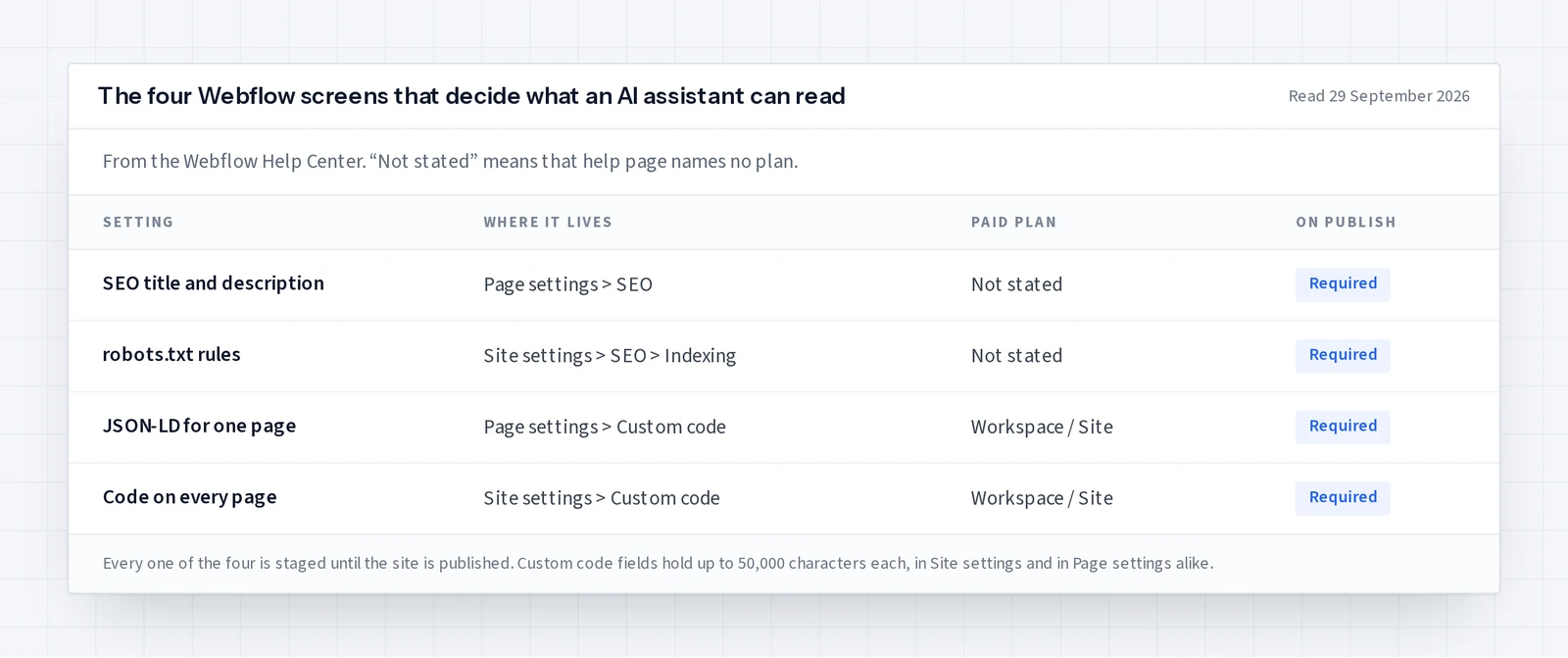 TechnicalSeptember 30, 2026
How to optimize a Webflow site for AI search
Webflow puts the settings that decide what ChatGPT, Claude and Perplexity can read on four different screens, two of them behind a paid plan, and all four behind a publish. Here is the pass, in order.Read more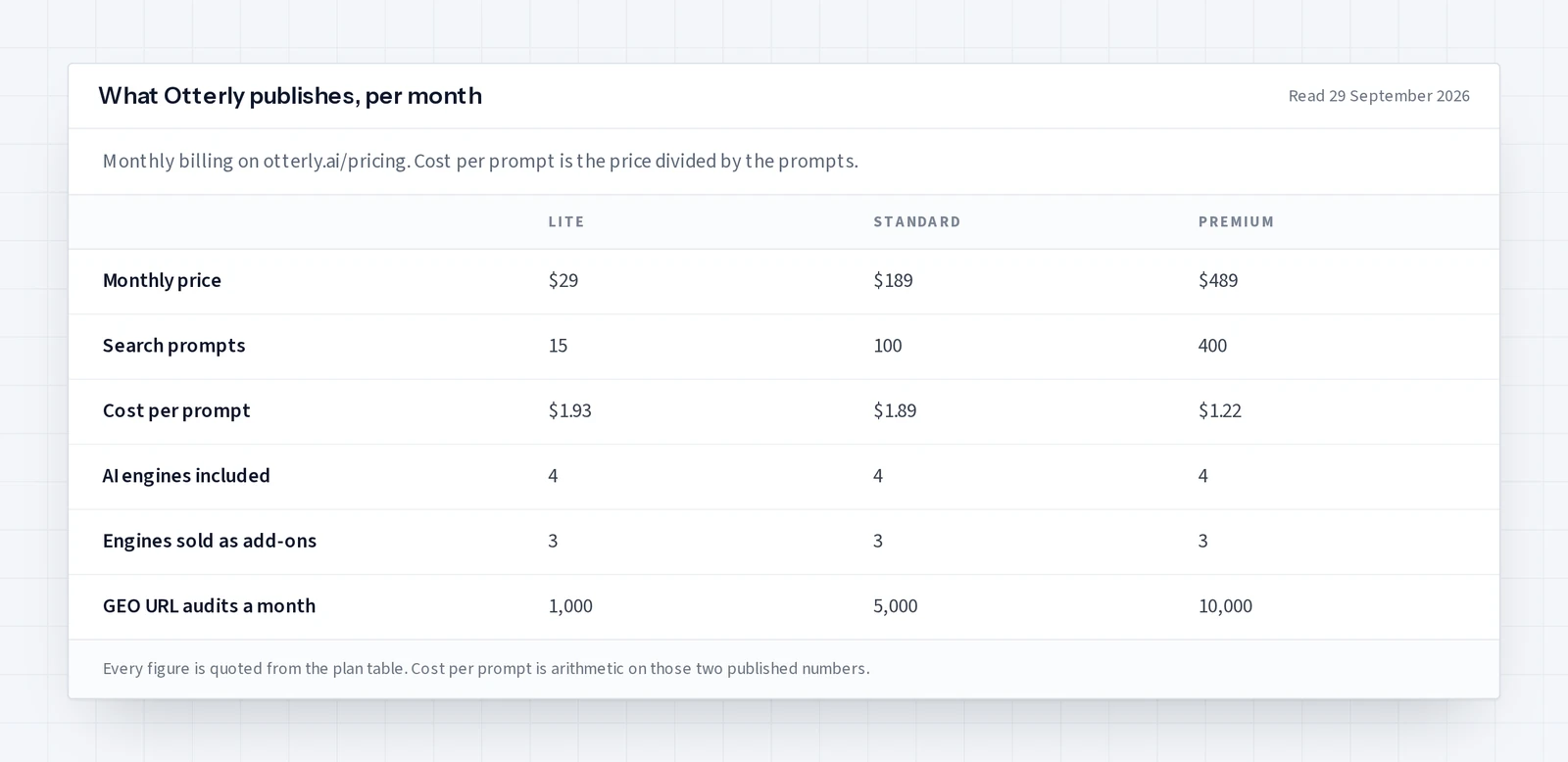 AI visibilitySeptember 29, 2026
Otterly alternatives: what $29 a month actually meters
Otterly.AI publishes three monthly prices and meters them in search prompts. What a prompt buys on the $29 Lite plan, which assistants are add-ons on every tier, and how to decide what you are actually paying for.Read more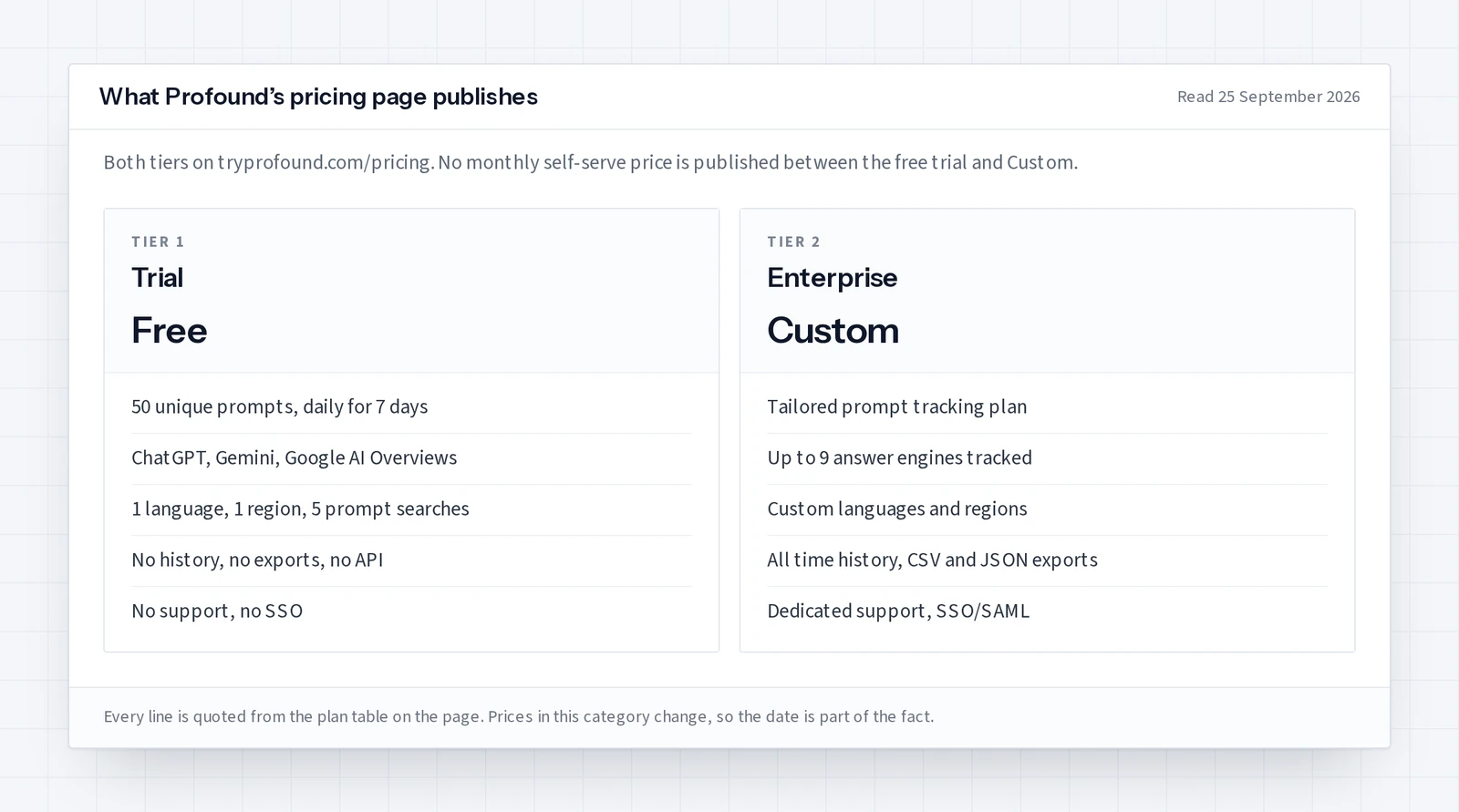 AI visibilitySeptember 25, 2026
Profound alternatives: the price moved behind a demo
Profound’s pricing page now publishes two tiers, a free seven-day Trial and a Custom Enterprise plan, and nothing in between. What that means if you were about to buy it, what you actually have to replace, and how to choose.Read more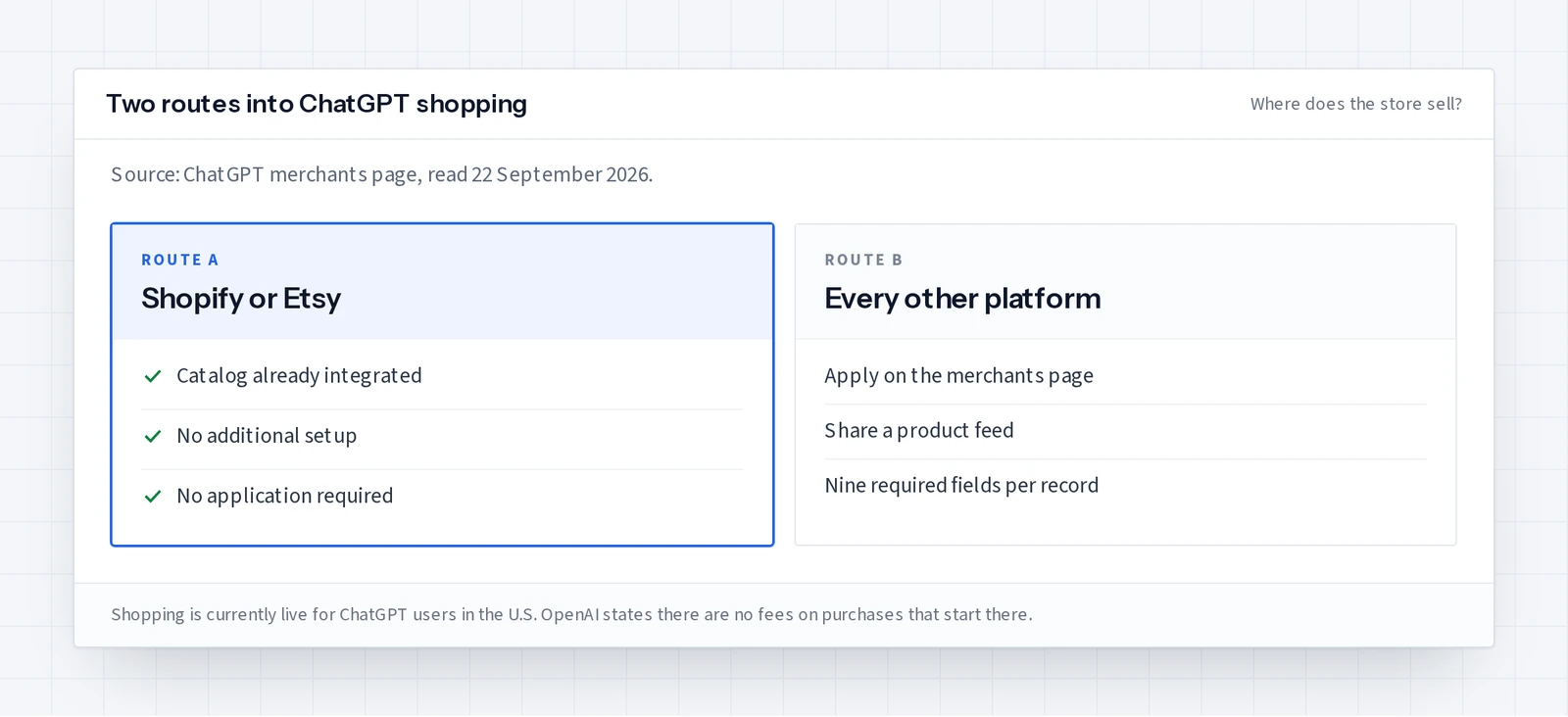 AI visibilitySeptember 22, 2026
How to get your products into ChatGPT shopping
Shopify and Etsy catalogs are already integrated. Every other store applies to share a product feed. Here are the nine fields OpenAI’s spec requires, what OpenAI says decides which product appears, and how to check your own catalog today.Read more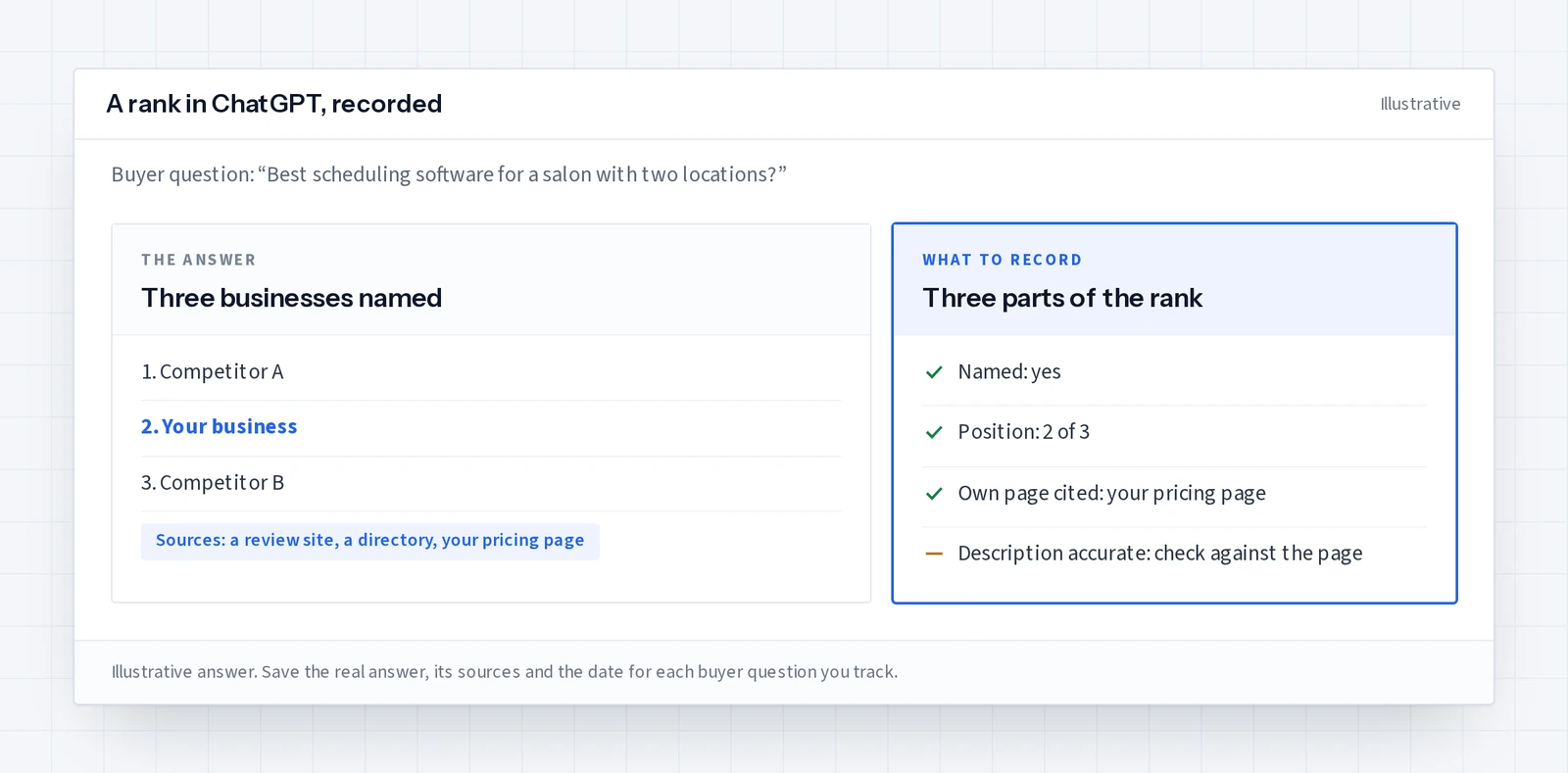 AI visibilitySeptember 20, 2026
How to rank in ChatGPT: fix one page for one buyer question
ChatGPT writes one answer with a few names and sources in it, so ranking means being named and cited. Start with one buyer question and the page that should answer it, check that ChatGPT’s search crawler can reach it, then record what changes.Read more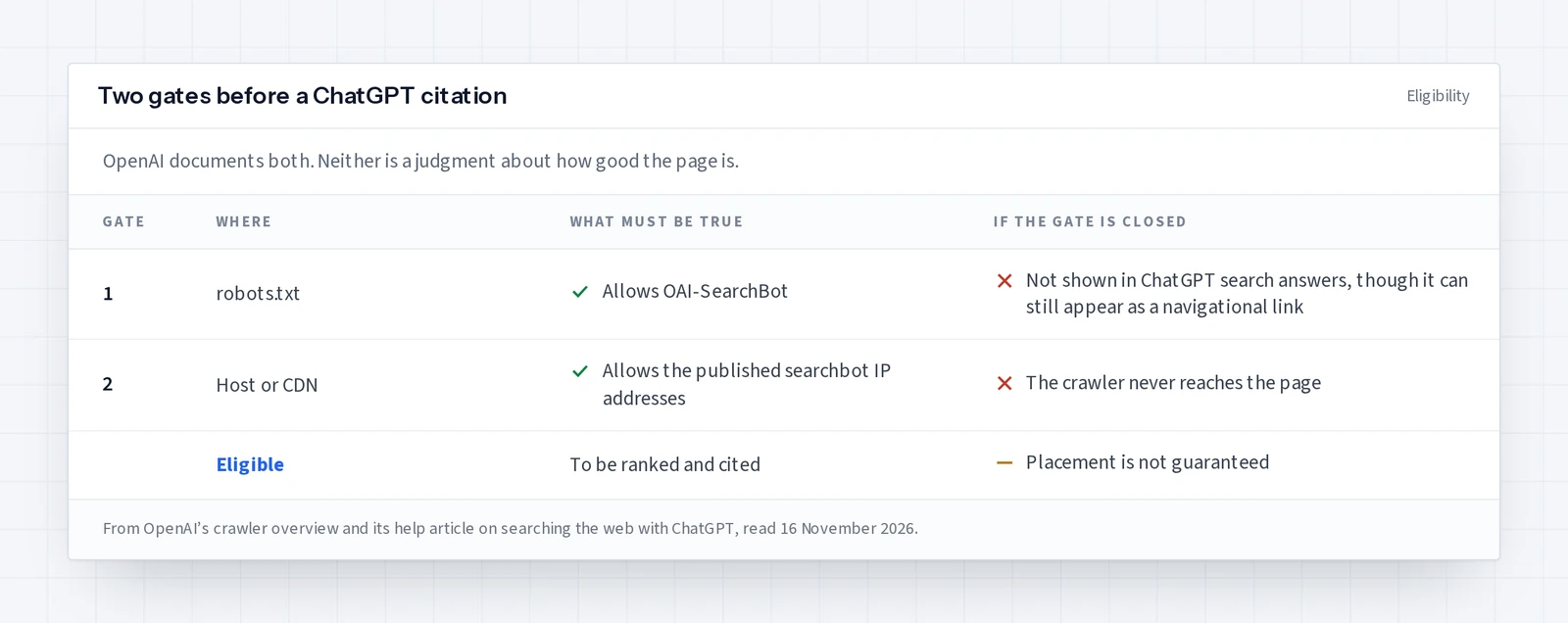 AI visibilitySeptember 17, 2026
ChatGPT SEO: how to get cited, using only what OpenAI documents
ChatGPT SEO has an eligibility half and a ranking half. OpenAI publishes the first one in full and almost nothing about the second. This is what the documentation actually says, and what to do with it.Read moreAI visibilitySeptember 13, 2026Does ChatGPT recommend your business? How to find out in ten minutes
A repeatable check that tells you whether ChatGPT names your business when a buyer asks, who it names instead, and which pages it used. No tool required for the first pass.Read more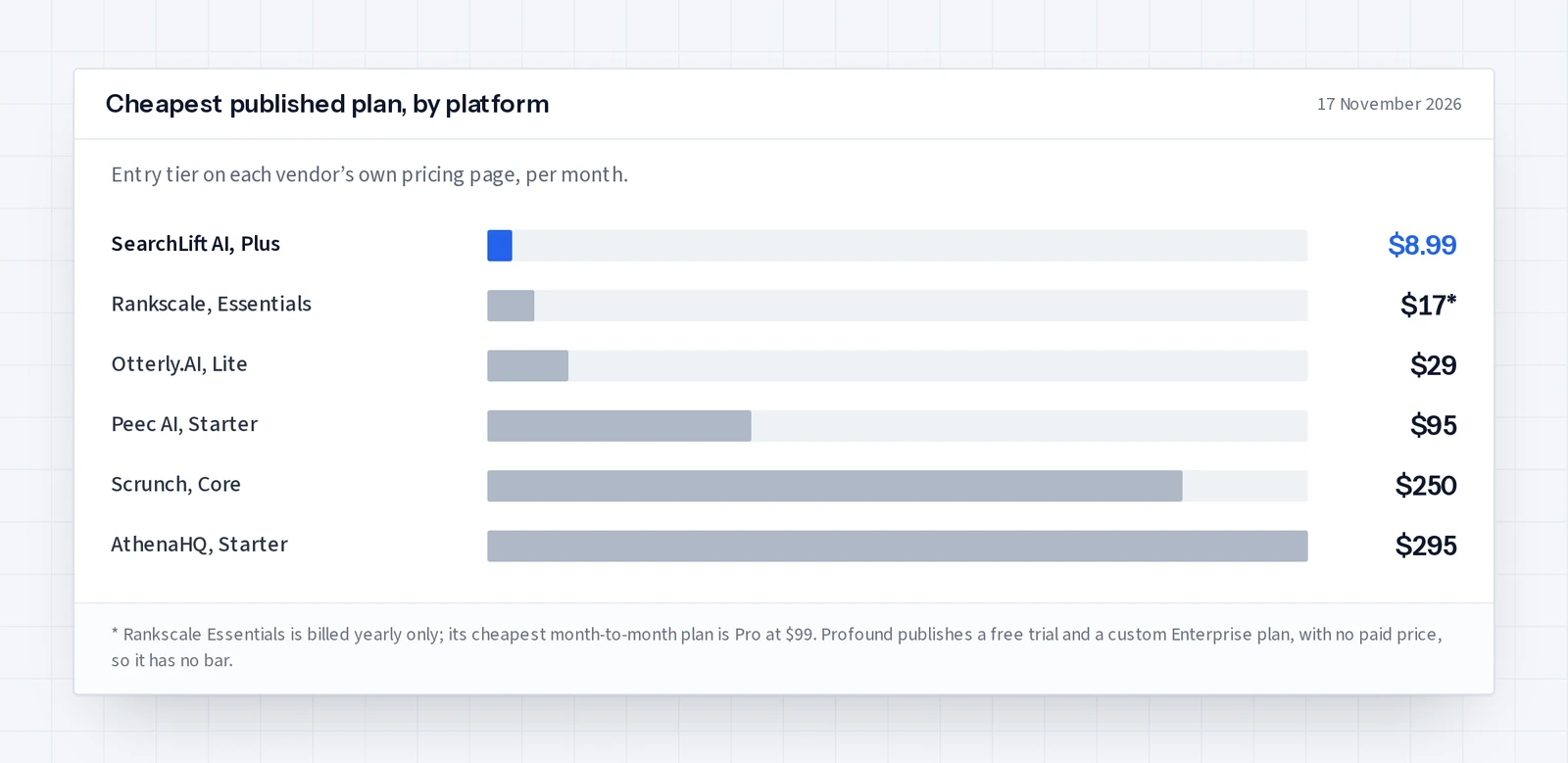 AI visibilitySeptember 12, 2026
The best AI SEO tools, ranked by what they cost to track all five assistants
Every published price for seven AI SEO platforms, read off their own pricing pages on 17 November 2026. The ranking is by one objective test: the cheapest plan that tracks ChatGPT, Claude, Perplexity, Gemini and Grok.Read more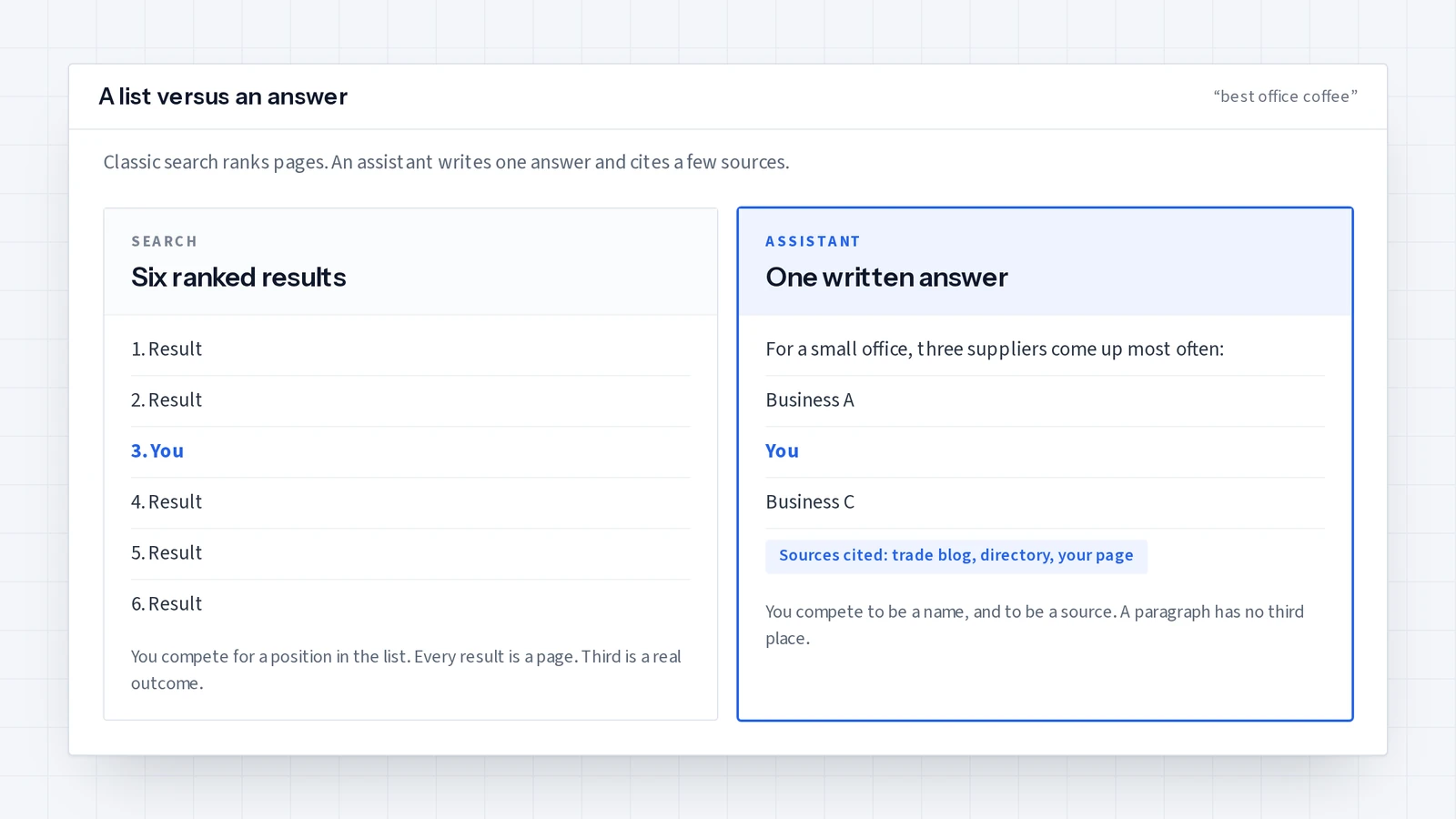 AI visibilitySeptember 11, 2026
What is AI SEO? A plain guide to generative engine optimization (GEO)
AI SEO, which researchers call generative engine optimization or GEO, is the work of getting a business named and cited inside AI-written answers. Here is what the research measured, what Google says it does and does not require, and where it really differs from normal SEO.Read more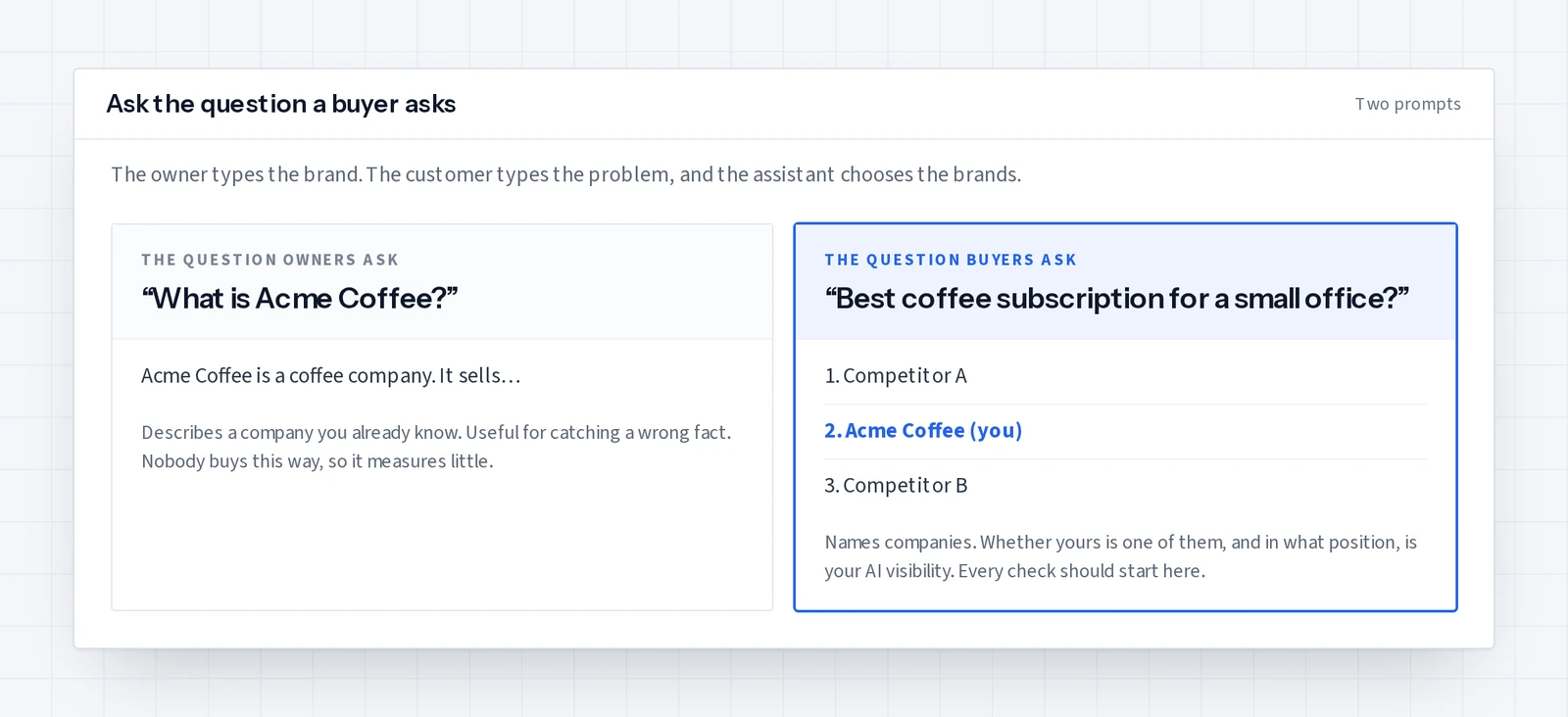 AI visibilitySeptember 11, 2026
How to check what ChatGPT, Claude and Gemini say about your business
A method you can run by hand this afternoon, the three reasons a single check misleads, and what to record so the numbers mean something next month.Read more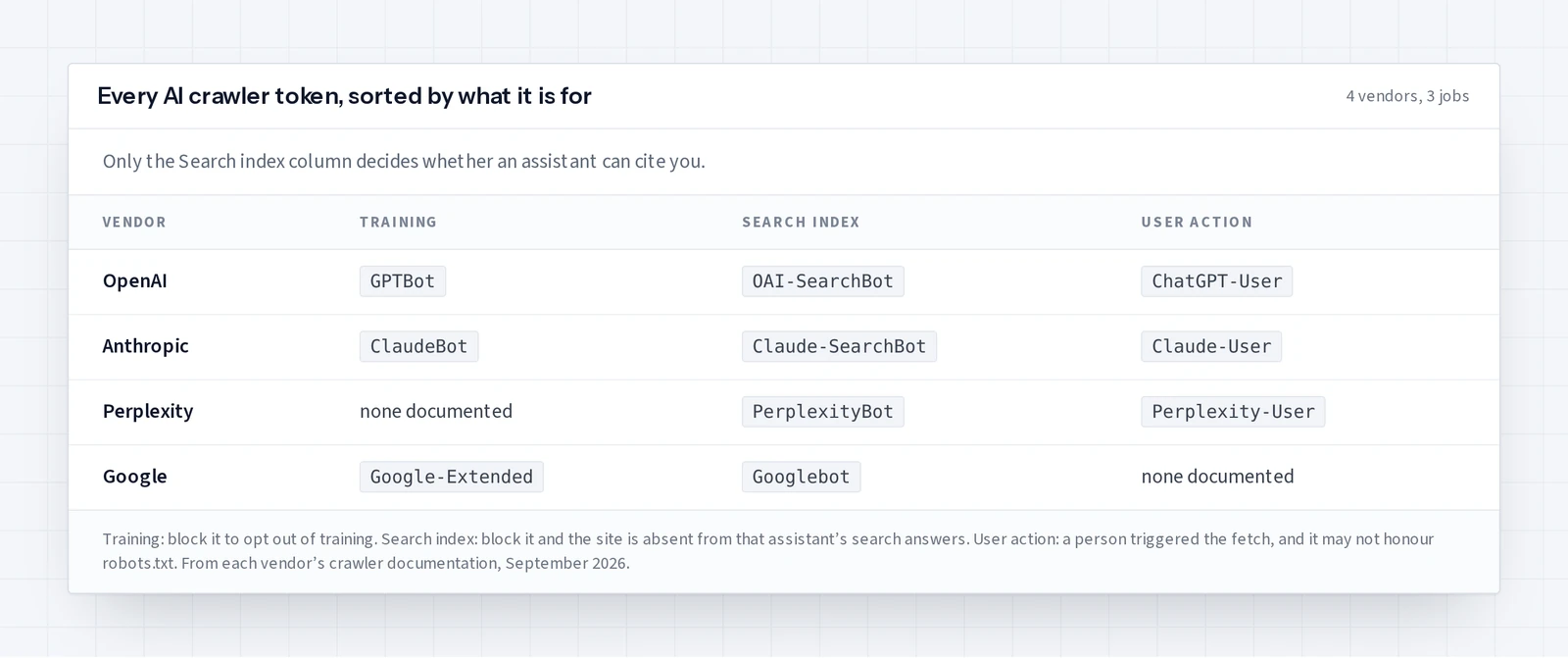 TechnicalSeptember 11, 2026
AI crawlers and robots.txt: which tokens to allow if you want to be cited
GPTBot, OAI-SearchBot, ChatGPT-User, ClaudeBot, Claude-SearchBot, Claude-User, PerplexityBot, Perplexity-User and Google-Extended, each quoted from its owner’s documentation, with a robots.txt you can copy.Read more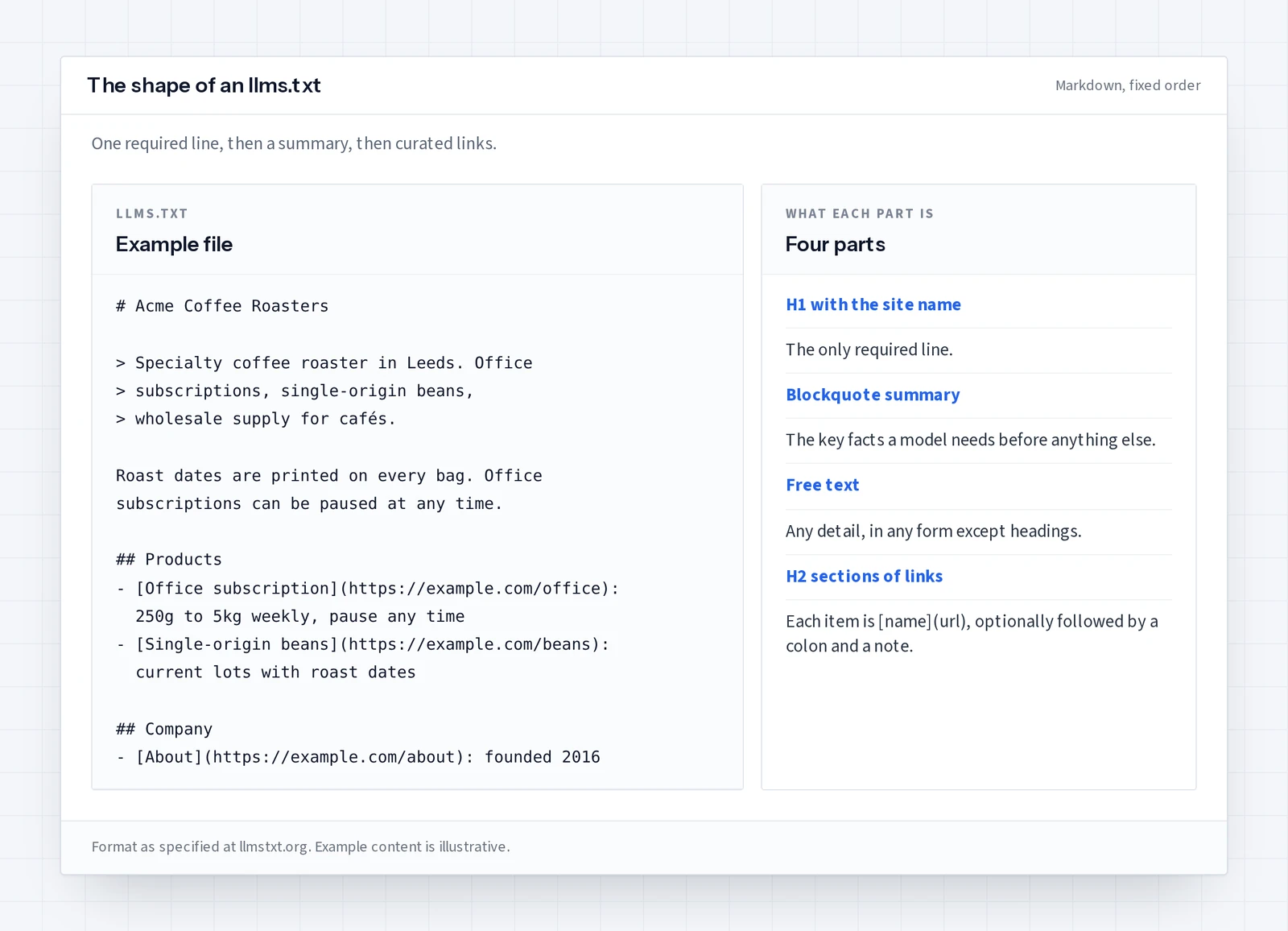 TechnicalSeptember 11, 2026
llms.txt: what the spec actually says, and whether your site needs one
The file format from the proposal itself, Google’s statement that no AI text file is required for AI Overviews, and the narrow case where writing one is still worth twenty minutes.Read more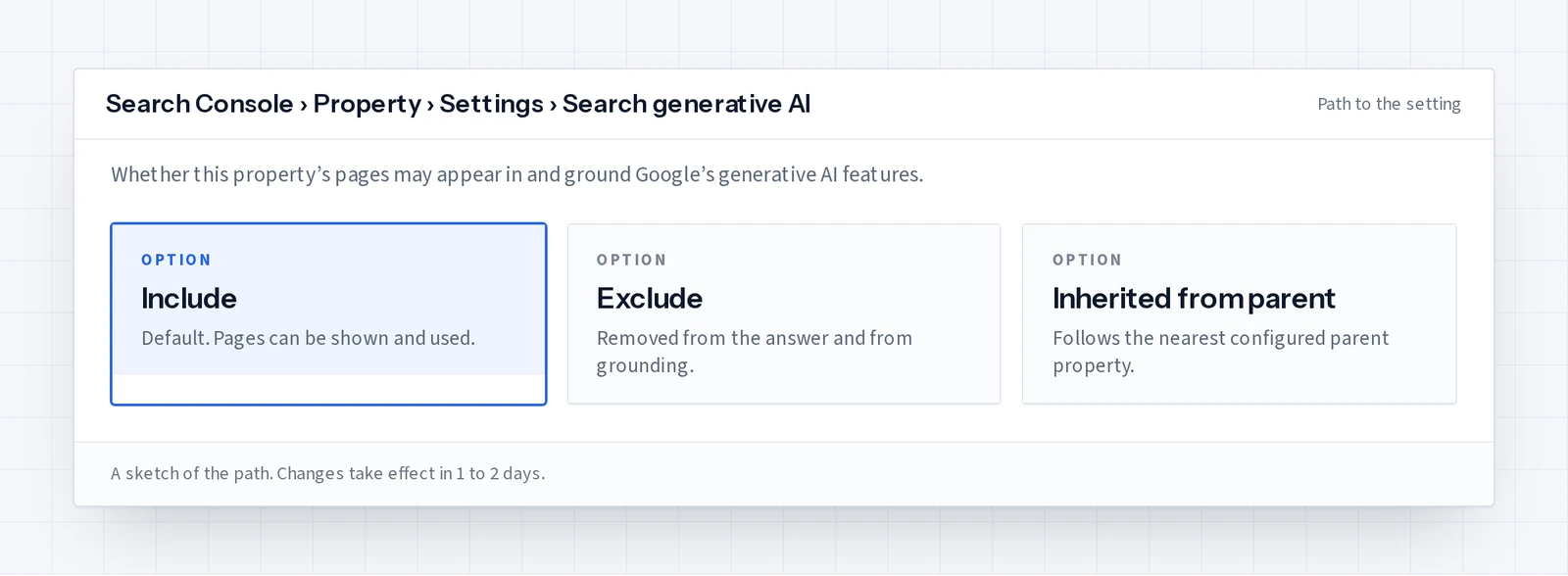 TechnicalSeptember 11, 2026
The Search generative AI control: the new setting that decides if Google can cite you
Google finished rolling this out to every site on 31 August 2026. It is the first real eligibility gate for AI Overviews and AI Mode, it lives in Search Console settings, and most site owners have not looked at it.Read more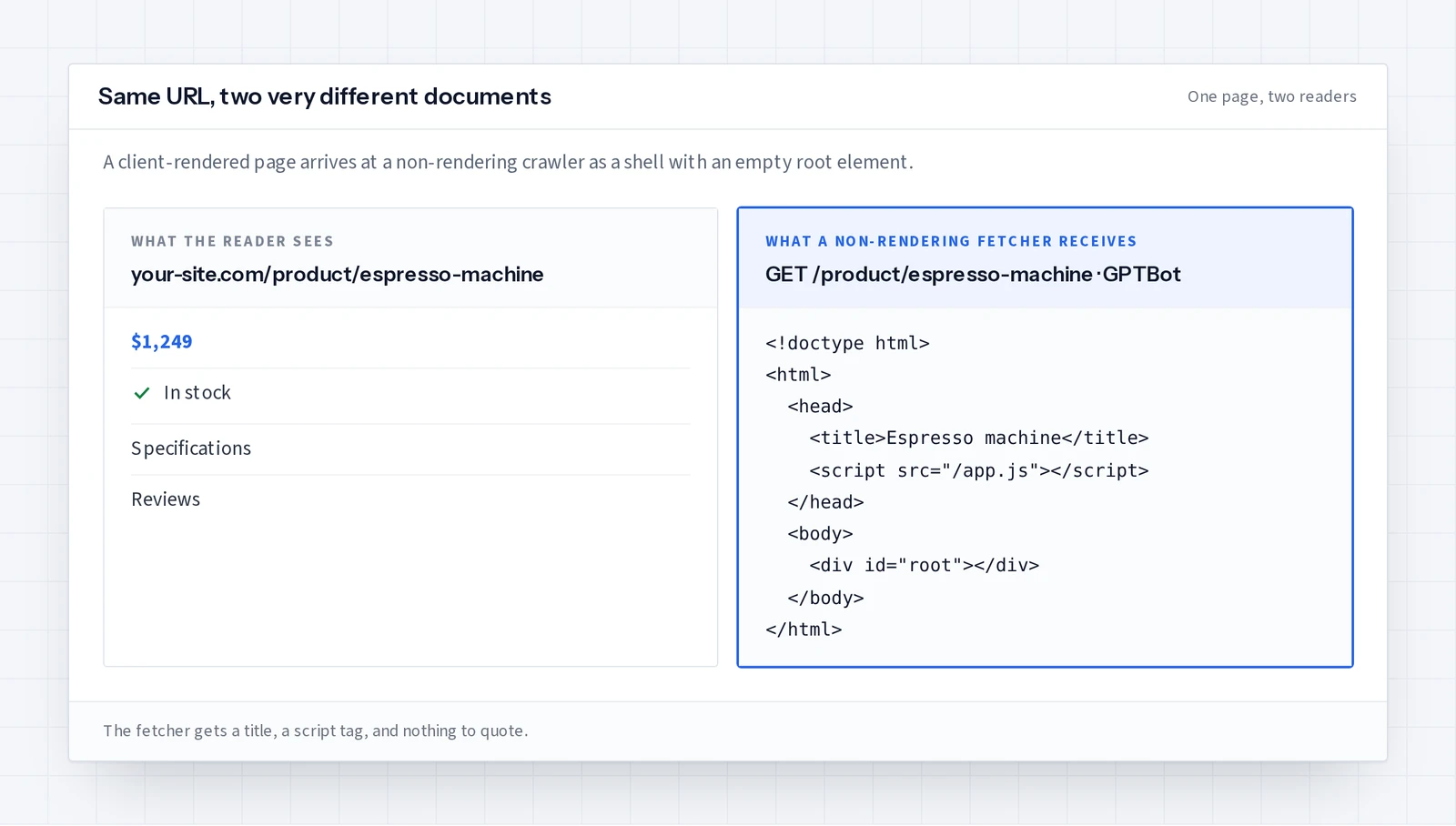 TechnicalSeptember 11, 2026
Do AI crawlers execute JavaScript? What GPTBot and ClaudeBot actually see
If your content arrives via JavaScript, the assistant quoting your competitor may simply never have seen yours. Here is how to test what each crawler receives, in ten minutes, without a tool.Read more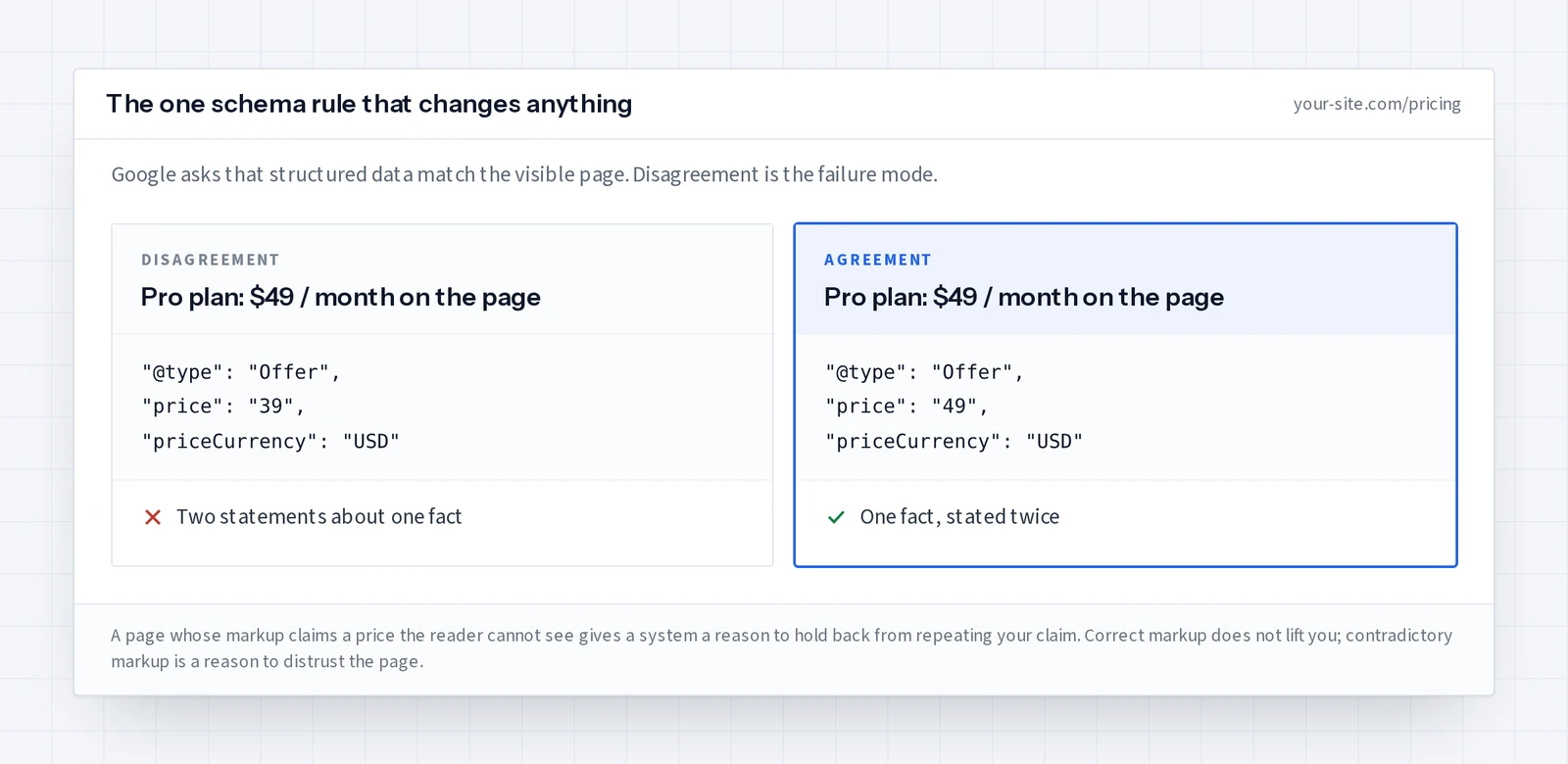 AI visibilitySeptember 11, 2026
Does schema markup help you get cited in AI search? What Google actually says
The confident answer everywhere is yes. Google’s own documentation says there is no special markup you need. Both can be true, and the difference is where the money is.Read more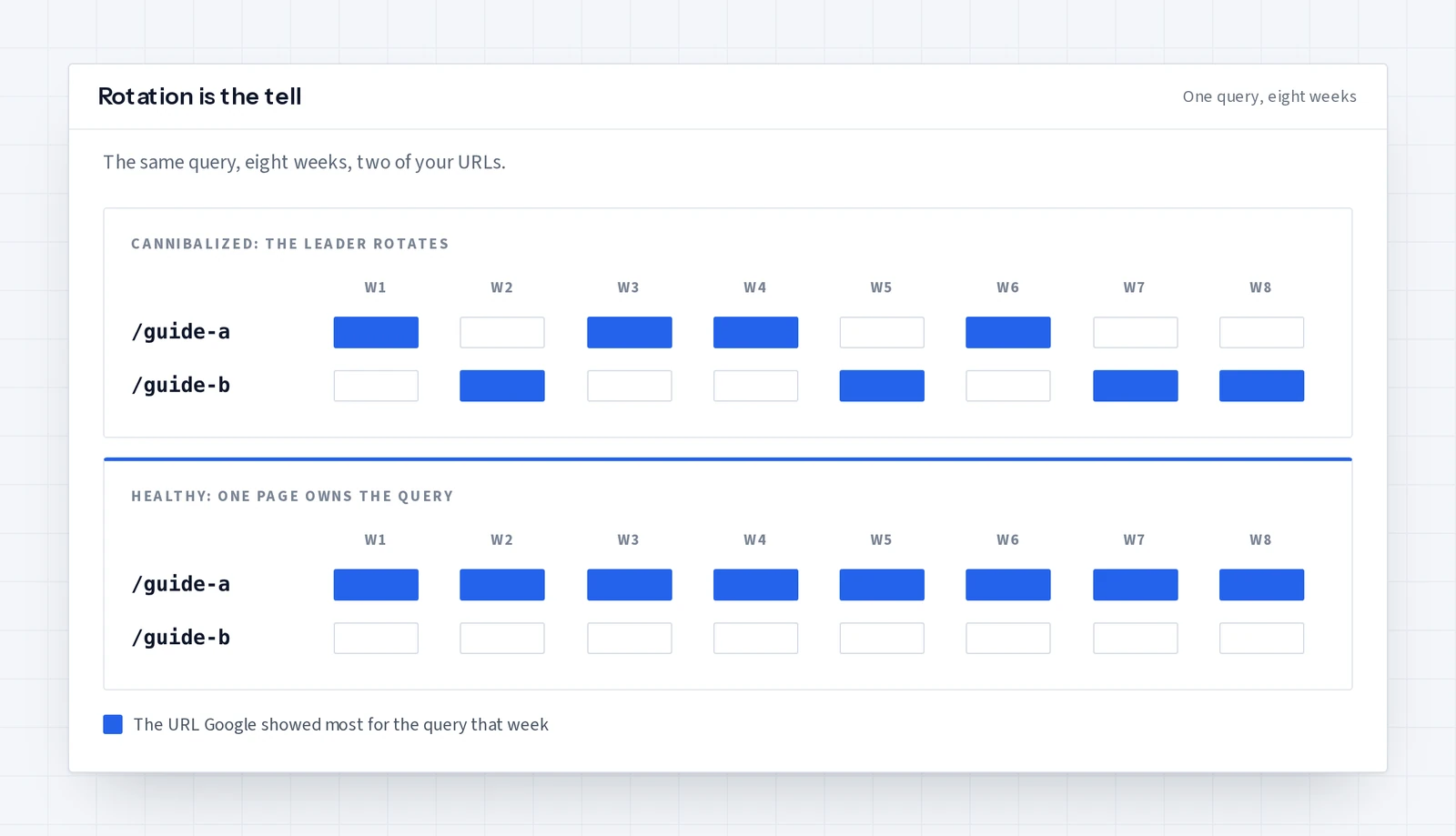 Search ConsoleSeptember 11, 2026
Find keyword cannibalization in Search Console, without buying a tool
Two of your pages are competing for the same query and Google is picking a different winner each week. The data to prove it is already in Search Console. Here is the exact procedure.Read more Search ConsoleSeptember 11, 2026